

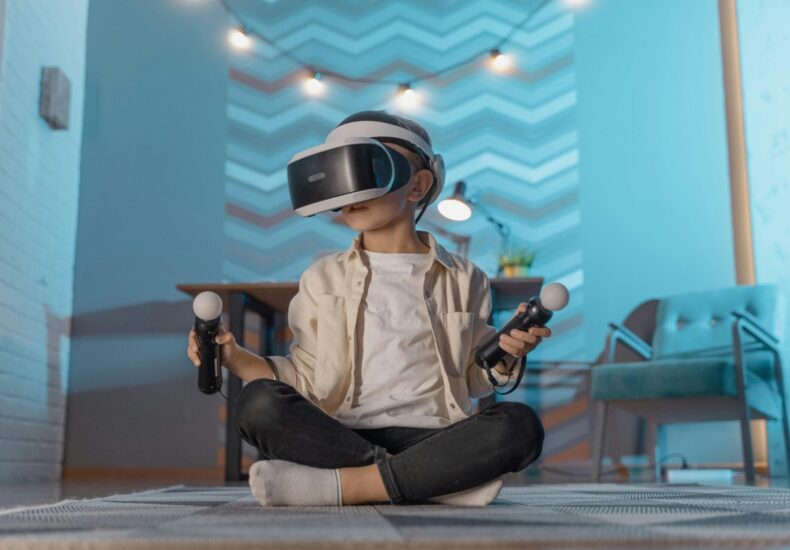
Kids in VR: Cognitive Development, Education, and Screen-Time Concerns
Virtual reality (VR) has rapidly evolved from a niche technology to a mainstream educational and entertainment tool. Among children and adolescents, VR offers immersive experiences that can reshape how they learn, play, and interact with digital environments. From virtual classrooms to interactive storytelling, VR provides opportunities that were unimaginable a decade ago. However, alongside these

How Head Bands Games Boost Critical Thinking and Communication Skills in Kids
In a world dominated by screens and instant gratification, finding playful activities that genuinely nurture cognitive and social growth in children has become increasingly essential. One game that has stood the test of time, not just as a source of laughter but as a powerful educational tool, is the Head Bands game. Often seen at

The Power of Play: How Social Interaction Shapes Kids
Play is often dismissed as mere recreation, but it is, in fact, a cornerstone of childhood development. Through play, children learn critical social, emotional, and cognitive skills that lay the foundation for lifelong learning and well-being. While traditional education focuses on structured lessons, it is in unstructured social interactions—games, imaginative scenarios, and cooperative activities—that children
Sneaky Snacky Squirrel: How This Educational Game Boosts Early Childhood Development
Children are naturally curious explorers, constantly testing the boundaries of their world and learning through play. In the realm of educational games, few titles manage to combine fun, engagement, and meaningful developmental benefits as seamlessly as Sneaky Snacky Squirrel. This colorful, hands-on board game is far more than a simple pastime; it is a tool
Animation Psychology: Why Certain Visual Styles Appeal to Children
Animation is a powerful medium that captivates audiences of all ages, but when it comes to children, its appeal is uniquely potent. From the earliest Saturday morning cartoons to the latest digital animations streaming on tablets, children show distinct preferences for certain visual styles. Understanding why particular animation styles resonate so strongly with young viewers

Hangman for Learning: How This Classic Game Boosts Vocabulary and Spelling Skills in Kids
When most people think of Hangman, their minds conjure up the image of a simple pencil-and-paper game, a casual pastime where the thrill comes from guessing letters before the stick figure is fully drawn. For children, however, Hangman is far more than just a game—it is a subtle yet powerful educational tool that can transform

Building Brains with Kingdoms: How Kingdomino Enhances Strategic Thinking in Kids
When it comes to nurturing young minds, few activities are as simultaneously engaging and educational as board games. Among these, Kingdomino has emerged as a remarkable tool for fostering strategic thinking in children. Its unassuming design, blending domino-style tiles with kingdom-building mechanics, hides an unexpectedly rich cognitive playground. For parents and educators looking to balance

The Global Story: Introducing Kids to World History Beyond the West
Teaching children about history is fundamental to shaping their understanding of the world and their place within it. Yet, much of the history taught in schools around the world tends to center predominantly on Western civilizations—Europe and North America—with only cursory mentions of other regions. This Western-centric approach has long been the norm, but it

From Board to Brain: Educational Benefits of Playing Stratego for Children
Board games have long been a staple of childhood play, providing not just entertainment but opportunities for learning that extend far beyond the living room. Among these games, Stratego stands out as a particularly powerful tool for cognitive and emotional development. While many may see it simply as a tactical battle between two armies on
Creating Digital Storytellers: How Kids Use Code to Build Games and Animations
In an age where screens dominate childhood experience, a profound shift is occurring: children are no longer just consuming digital media—they’re creating it. The rise of accessible coding platforms, visual programming tools, and creative digital spaces has empowered a new generation of storytellers. Children are now using code as a modern language for storytelling, crafting