

Hangman for Learning: How This Classic Game Boosts Vocabulary and Spelling Skills in Kids
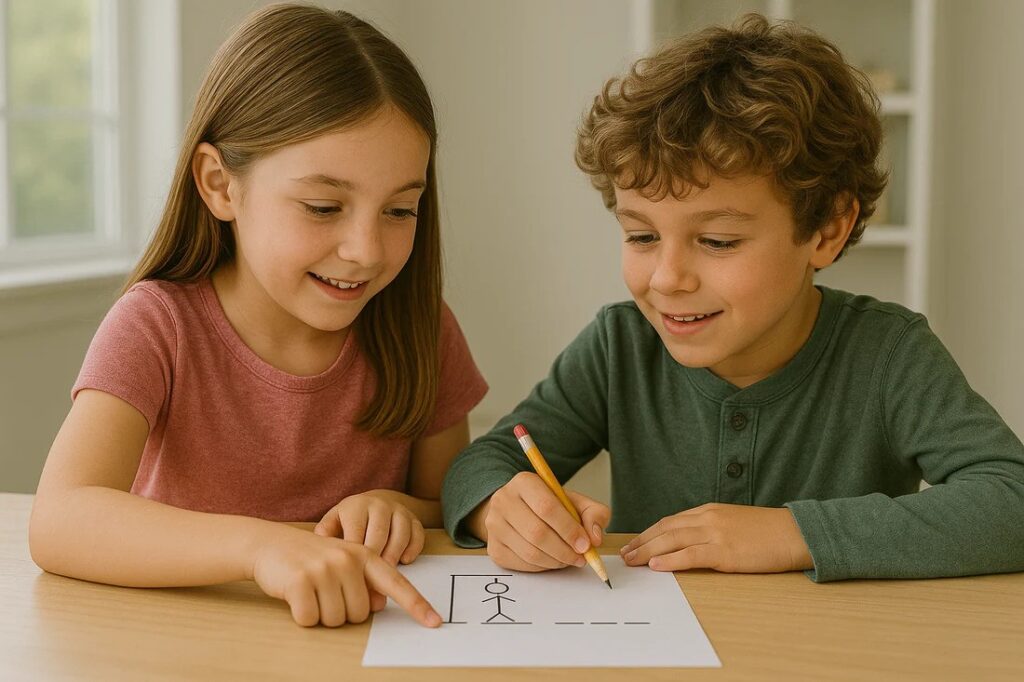
When most people think of Hangman, their minds conjure up the image of a simple pencil-and-paper game, a casual pastime where the thrill comes from guessing letters before the stick figure is fully drawn. For children, however, Hangman is far more than just a game—it is a subtle yet powerful educational tool that can transform the way they approach language, spelling, and critical thinking. While many parents and educators may overlook its potential, the benefits of Hangman for learning are profound, bridging the gap between fun and fundamental literacy skills.
Building Vocabulary Through Play
Vocabulary acquisition is at the heart of learning a language, and Hangman offers a unique environment for this process. Unlike rote memorization, which can feel tedious and disconnected from real-world contexts, Hangman introduces new words in a dynamic and engaging setting. Children encounter unfamiliar terms as they guess letters, prompting curiosity and active problem-solving. This playful challenge encourages them to think about letter patterns, word structure, and meaning, creating a richer, more nuanced understanding of language.
Research consistently shows that children retain new vocabulary better when it is introduced in a game-based context. Hangman, by its very nature, requires repeated exposure to words, giving kids multiple chances to see, recall, and ultimately internalize new terms. Moreover, because the game is interactive, children are actively involved in their own learning, which enhances memory retention and strengthens neural connections associated with language processing.
Enhancing Spelling Skills Naturally
Spelling is often taught through drills and repetition, a method that can feel monotonous to young learners. Hangman transforms this process into a fun, immersive experience. As children guess letters, they are constantly checking and adjusting their hypotheses about how words are spelled. This trial-and-error approach reinforces orthographic rules and common letter combinations, allowing spelling skills to develop organically.
One of the most remarkable aspects of Hangman is that it encourages self-correction. When a guessed letter is incorrect, children must reevaluate their assumptions, fostering reflection and attention to detail. This continuous feedback loop—guess, check, adjust—not only improves spelling but also cultivates resilience and persistence, qualities that are invaluable for lifelong learning. In essence, Hangman teaches kids that making mistakes is part of the learning process, and that careful observation and thoughtful reasoning can lead to success.
Strengthening Critical Thinking and Pattern Recognition
Hangman is more than a language exercise; it is a cognitive workout that sharpens critical thinking. Children must analyze patterns in words, consider probabilities, and make strategic decisions about which letters to guess first. This mental engagement stimulates areas of the brain involved in problem-solving and logical reasoning, skills that extend far beyond language arts.
The game also enhances pattern recognition, a crucial component of reading and writing. As kids become familiar with common prefixes, suffixes, and letter combinations, they start to anticipate how words are likely to be structured. This predictive thinking accelerates reading fluency and comprehension, giving children a sense of confidence as they decode new words in books and classroom materials. Just like mastering new skills in educational games, understanding practical topics—such as electrical services in Orlando—can build confidence and problem-solving abilities in real-world situations. Over time, these cognitive gains support broader academic success, making Hangman a surprisingly powerful educational ally.
Encouraging Focus and Patience
In a world increasingly dominated by screens and instant gratification, Hangman offers a valuable lesson in focus and patience. The game requires sustained attention, careful observation, and deliberate decision-making. Children learn to slow down, consider their options, and approach problems methodically.
This practice of concentration has far-reaching benefits. Focused attention supports better reading comprehension, more accurate writing, and enhanced memory. Patience, too, is nurtured through the gentle tension of the game, as children wait for the next clue and think through each guess. Even incorporating fun elements like cowboy PVC patches on game boards can make the learning experience more engaging. These soft skills—often overlooked in traditional educational settings—are cultivated naturally through the simple act of playing Hangman.
Adapting Hangman for Different Learning Levels
One of the most appealing aspects of Hangman is its adaptability. The game can be tailored to suit children of different ages, reading abilities, and educational goals. For younger children, simple three- or four-letter words can introduce basic vocabulary and spelling patterns. As children grow more confident, the game can incorporate longer, more complex words, challenging them to apply higher-level thinking and broader language knowledge.
Teachers and parents can also integrate thematic vocabulary, such as science terms, historical figures, or literary words, turning Hangman into a targeted learning exercise. By aligning the game with curriculum goals, Hangman becomes not just a pastime but a strategic educational tool that reinforces classroom learning in a memorable, enjoyable way. This approach can be applied to real-world contexts as well, such as teaching students about everyday services like concrete cleaning in St. Augustine.
Social and Emotional Learning Benefits
Hangman is often played in a group setting, which adds an important social dimension to its educational value. Children learn to communicate their ideas, take turns, and collaborate on problem-solving. Even in competitive versions of the game, the stakes are low, creating a safe environment to practice resilience and sportsmanship.
Emotionally, the game can boost confidence. Successfully guessing a challenging word provides a sense of accomplishment, while the trial-and-error process teaches that mistakes are not failures but opportunities to learn. These lessons in emotional regulation, perseverance, and self-efficacy are subtle but crucial complements to the academic skills Hangman fosters.
Digital Hangman and Modern Adaptations
With the rise of digital learning platforms, Hangman has evolved beyond pencil and paper. Online versions of the game offer interactive features, instant feedback, and customizable word lists, making it even more engaging for today’s tech-savvy children. Some apps track progress, allowing parents and teachers to monitor vocabulary growth and spelling improvement.
Despite these digital adaptations, the core educational principles remain the same. Whether played on paper or screen, Hangman challenges children to think critically, analyze language, and engage actively in their learning. The digital format can also introduce multimedia elements, such as images or pronunciation guides, which further enrich the educational experience.
Integrating Hangman into Everyday Learning
One of the reasons Hangman is so effective is that it can be seamlessly integrated into daily routines. It requires minimal preparation and can be played almost anywhere—during car rides, waiting for appointments, or as a classroom warm-up activity. This flexibility makes learning continuous rather than confined to formal lessons, reinforcing the idea that education can be playful and enjoyable.
Parents and educators can also encourage children to create their own Hangman words, fostering creativity and deepening engagement with language. When children choose words themselves, they are more invested in the game, and the learning experience becomes personalized and meaningful. This level of autonomy nurtures intrinsic motivation, a key driver of long-term educational success.
Long-Term Academic Impact
While Hangman may seem like a simple game, its long-term educational impact is significant. Children who regularly engage with word-based games develop stronger vocabulary, improved spelling, and enhanced reading skills. They become more confident in their ability to decode unfamiliar words and more adept at recognizing patterns in language.
Beyond language arts, the critical thinking, patience, and problem-solving skills cultivated through Hangman contribute to overall cognitive development. Students often find that the strategic thinking they practice in the game translates to other academic subjects, from mathematics to science. In this sense, Hangman serves as both a language-building tool and a foundation for broader intellectual growth.

Conclusion
Hangman is far more than a nostalgic pastime; it is a multifaceted educational tool that can significantly enhance children’s vocabulary, spelling, and cognitive skills. By combining play with learning, the game fosters active engagement, critical thinking, and emotional resilience. Its adaptability allows it to meet learners where they are, providing challenges that grow with their abilities. Whether used in the classroom, at home, or through digital platforms, Hangman exemplifies the power of playful learning, proving that education does not have to be tedious to be effective.
In embracing Hangman as a learning tool, parents and educators open doors to a world where fun and literacy go hand in hand. The simple act of guessing letters becomes a gateway to richer language comprehension, stronger spelling skills, and a lifelong love of words. In the end, the classic game of Hangman is not just about saving a stick figure; it’s about building confident, capable, and curious learners—one letter at a time.