Why Risk Feels Like a Game but Teaches Like a Classroom
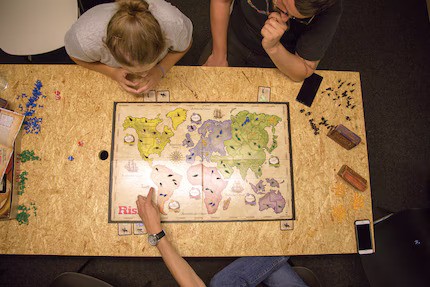
At first glance, Risk looks like just another board game filled with tiny plastic armies and dramatic dice rolls. Kids laugh, argue, negotiate, and celebrate victories, often without realizing that something much deeper is happening beneath the surface. While they focus on conquering territories and defending borders, their minds are quietly absorbing lessons in geography, history, logic, and decision-making that no worksheet could ever replicate.
What makes Risk so powerful as an educational tool is its ability to disguise learning as play. Children are not told they are studying continents, trade routes, or strategic thinking. They are simply immersed in a world where choices matter, consequences unfold, and knowledge becomes a survival tool rather than a memorized fact. This emotional investment turns abstract concepts into lived experiences, which is where real learning takes root.
Learning Geography Through Hands-On Exploration
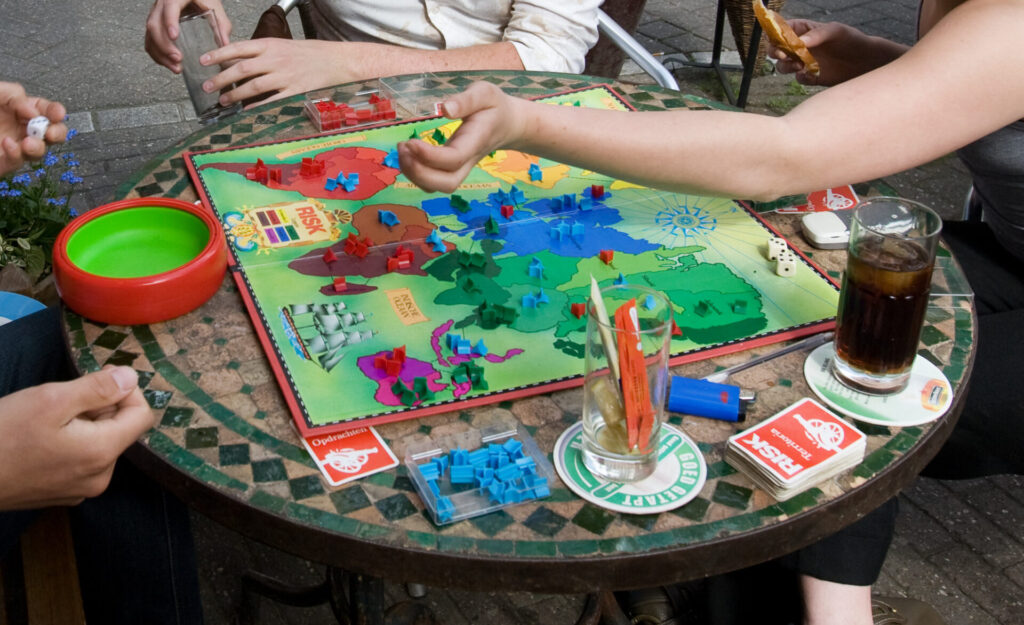
Geography in textbooks often feels distant and disconnected from real life. Names of countries blur together, continents feel static, and borders seem arbitrary. Risk changes that dynamic entirely. The world map becomes a living space where every territory matters, every border creates opportunity or danger, and every continent tells a story.
As kids play, they naturally begin to recognize the shape of continents and the relationships between regions. They learn that South America has limited entry points, that Australia is isolated but defensible, and that Europe connects to multiple territories, making it powerful yet vulnerable. These realizations happen organically, through repeated play rather than forced memorization.
Over time, children start using geographical language without prompting. They refer to Eastern Europe, North Africa, and Southeast Asia with confidence. They understand proximity, choke points, and regional influence. Geography stops being a list of names and becomes a strategic landscape, one they navigate with intention and growing sophistication.
History Comes Alive Through Strategic Context
Risk is not a history lesson in the traditional sense, but it mirrors historical patterns closely enough to spark curiosity and understanding. Kids begin to notice that power often concentrates around certain regions, just as it has throughout human history. They see how expansion leads to conflict, how overextension weakens control, and how alliances form and dissolve based on shifting interests.
These moments open the door to meaningful conversations about real historical events. Why were certain regions fought over repeatedly? How did geography shape ancient empires or modern wars? Why did trade routes matter so much? Risk creates a framework where these questions feel relevant rather than abstract.
Instead of learning history as isolated events, children experience the underlying forces that drive it. They come to understand that history is shaped by decisions, resources, and geography, not just dates and names. This conceptual understanding builds a foundation that makes future history lessons far more engaging and comprehensible.
Decision-Making Under Pressure and Uncertainty
One of the most valuable skills Risk teaches is how to make decisions without perfect information. Kids must constantly weigh risks, predict outcomes, and adapt to unexpected changes. Dice rolls introduce chance, opponents introduce unpredictability, and long-term goals compete with short-term survival.
This environment mirrors real-life decision-making far more accurately than controlled classroom exercises. Children learn that not every choice has a clear right answer. Sometimes the safest move is defensive, sometimes bold action pays off, and sometimes luck changes everything. What matters is learning how to think through options rather than avoiding mistakes altogether.
Over time, kids become more reflective. They start analyzing past decisions, recognizing patterns, and adjusting their strategies. This habit of thinking critically about choices and consequences carries over into academics, social situations, and personal problem-solving.
Understanding Probability and Logical Thinking
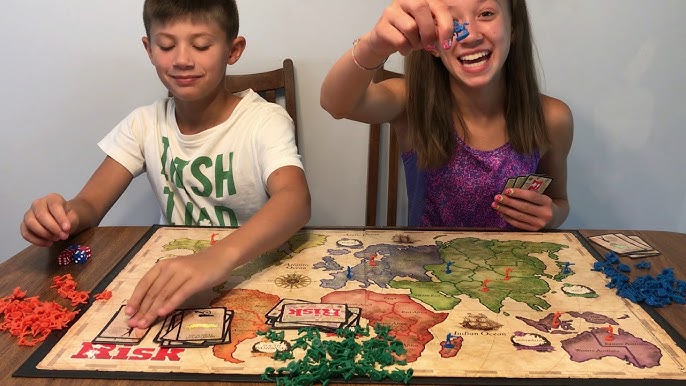
Although Risk doesn’t explicitly teach math, it quietly reinforces probabilistic thinking. Children quickly learn that attacking with three armies is usually stronger than attacking with one, that certain matchups are statistically favorable, and that repeated low-odds attacks rarely end well.
These insights build intuitive mathematical reasoning. Kids begin estimating outcomes rather than guessing blindly. They consider likelihoods, weigh potential losses, and make informed choices based on probability. This kind of reasoning is foundational to advanced math and science, yet it develops here through experience rather than instruction.
The beauty of this process is that failure becomes educational rather than discouraging. A lost battle isn’t a bad grade; it’s data. Kids absorb lessons naturally, refining their logic with every turn and learning that smart thinking often matters more than luck.
Emotional Intelligence and Social Learning
Risk is as much a social game as it is a strategic one. Negotiations, alliances, betrayals, and reconciliations are all part of the experience. Kids learn how to communicate persuasively, read intentions, and manage emotions under competitive pressure.
These interactions teach emotional intelligence in a way few educational tools can. Children experience frustration when plans fail, pride when strategies succeed, and empathy when alliances break. They learn to regulate emotions, recover from setbacks, and maintain relationships even after intense competition.
Importantly, Risk teaches that winning is not everything. A child who dominates the board but alienates every other player quickly discovers the cost of poor social strategy. Success often depends on trust, cooperation, and timing, reinforcing the idea that how you play matters just as much as the outcome.
Building Long-Term Thinking and Patience
In a world of instant gratification, Risk demands patience. Games unfold over long periods, sometimes stretching across hours. Victory rarely comes from impulsive moves; it requires sustained focus, careful planning, and the ability to delay gratification.
Kids learn to set long-term goals and resist the temptation of immediate rewards that could undermine future success. They begin to understand that sacrificing a small territory now might secure an entire continent later. This lesson is profoundly transferable, influencing how children approach studying, saving money, or working toward personal goals.
The ability to think ahead, adjust plans, and stay committed despite setbacks is a cornerstone of academic and personal success. Risk nurtures this mindset in a way that feels natural rather than forced, making patience a practiced skill rather than a moral lecture.
Encouraging Curiosity Beyond the Board
One of the most overlooked educational benefits of Risk is the curiosity it inspires. Kids often start asking questions about the real world map. They wonder why certain borders exist, how countries interact, and whether real conflicts resemble the ones they play out on the board.
This curiosity creates opportunities for deeper learning. Parents and educators can connect gameplay to real-world geography and history, turning casual interest into meaningful exploration. A child who once struggled to remember continents may suddenly want to know more about Africa’s regions or Europe’s political complexity.
When learning is driven by curiosity rather than obligation, retention increases dramatically. Risk acts as a gateway, transforming passive learners into active explorers who seek understanding because it feels relevant and exciting.
Why Winning Becomes Secondary to Learning
While competition initially draws kids to Risk, many eventually discover that the real satisfaction comes from improvement rather than victory. They enjoy refining strategies, anticipating opponents, and executing well-thought-out plans even if they don’t win the game.
This shift in focus is incredibly valuable educationally. Kids learn to value growth, resilience, and effort over outcomes. They understand that failure is part of learning and that each game is an opportunity to get better rather than a judgment of ability.
In this way, Risk supports a growth mindset, encouraging kids to see challenges as chances to learn rather than obstacles to avoid. This mindset has lasting benefits far beyond the game board.
Risk as an Educational Experience Worth Embracing
Risk succeeds as an educational game because it respects children’s intelligence. It doesn’t simplify the world or shield players from complexity. Instead, it invites them to engage with it, make sense of it, and navigate its challenges thoughtfully.
Through geography, history, decision-making, and emotional growth, kids gain skills that textbooks alone cannot provide. They learn not just how the world is shaped, but how choices shape outcomes within it. They discover that success depends on understanding systems, people, and consequences.
When kids play Risk, they are doing far more than trying to win. They are learning how to think, how to plan, and how to engage with a complex world. That is a lesson worth far more than any final victory.