
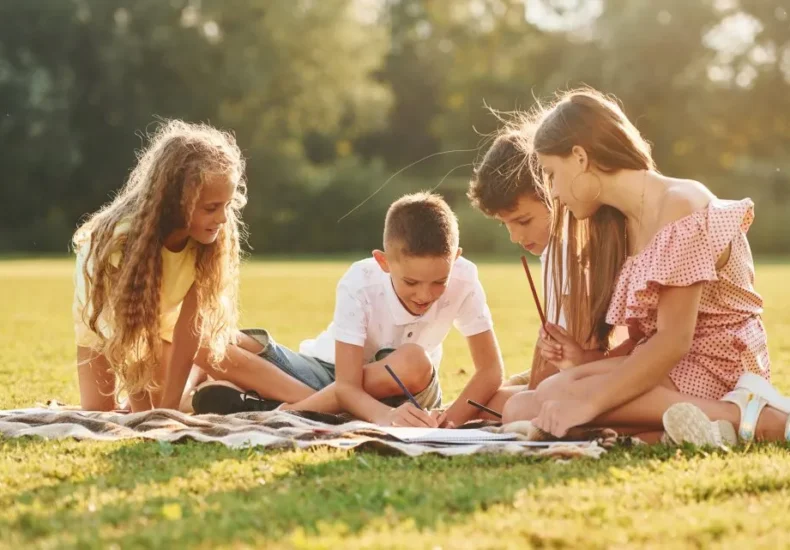
How Playing Checkers Boosts Cognitive Development in Children
Checkers is often seen as a simple, classic board game, something that conjures memories of lazy afternoons spent with family or friends. Yet beneath its straightforward rules lies a rich world of educational benefits that can significantly boost a child’s cognitive development. Far from being just a pastime, checkers provides a structured environment where young minds can learn critical thinking, strategic planning, and problem-solving skills, all while having fun.
The Foundation of Cognitive Skills Through Play
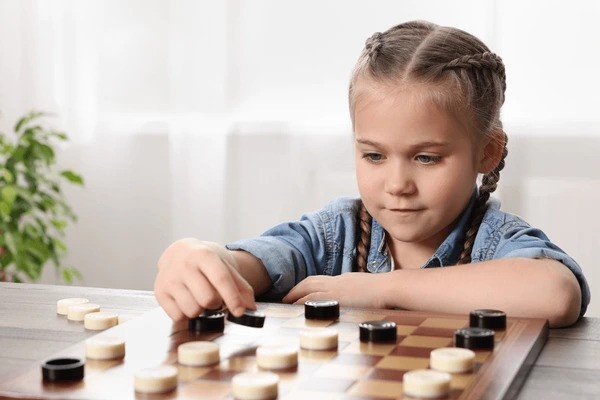
Children learn best through play, and games like checkers are particularly effective because they combine entertainment with mental challenge. From the very first move, children are prompted to observe, plan, and anticipate outcomes. The game requires them to think multiple steps ahead, weighing the consequences of each decision. This nurtures executive function, the set of mental skills that help children manage time, pay attention, and switch between tasks effectively.
The act of playing checkers engages both the left and right hemispheres of the brain. The left hemisphere, associated with logic, math, and analytical thinking, is activated as children calculate moves and evaluate potential outcomes. Meanwhile, the right hemisphere, linked to creativity and spatial awareness, helps them recognize patterns on the board and anticipate opponent strategies. By engaging these cognitive pathways simultaneously, checkers serves as a natural exercise for the growing brain.
Even for younger children who are just learning the rules, the game introduces fundamental concepts such as turn-taking, spatial awareness, and sequencing. These skills form the cognitive foundation for more complex learning tasks in the classroom, laying the groundwork for academic success.
Developing Strategic Thinking
One of the most profound educational benefits of checkers is its ability to cultivate strategic thinking. Unlike games of pure chance, checkers rewards planning and foresight. Each move requires children to consider the immediate impact and potential future consequences. Should they advance a piece aggressively, risking it for a possible capture, or play defensively to protect their pieces? These decisions mirror real-life scenarios where evaluating risks and benefits is crucial.
Strategic thinking nurtured through checkers extends beyond the game board. Children who practice anticipating outcomes and planning several moves ahead are better prepared to tackle complex problems in school, whether in mathematics, science, or even social interactions. The game encourages patience and thoughtful reflection—skills that are indispensable in academic and everyday contexts.
Additionally, children learn about cause and effect in a very tangible way. A poorly considered move can have immediate consequences, teaching them to carefully weigh options before acting. Over time, this strengthens their ability to make reasoned decisions, a skill that translates directly into academic and personal problem-solving.
Enhancing Memory and Concentration
Memory is another key cognitive domain that checkers naturally strengthens. Children must remember which pieces have been moved, the positions of both their own and their opponent’s pieces, and potential threats several moves in advance. This continuous mental tracking exercises working memory, a critical function for learning and comprehension.
Moreover, checkers requires sustained focus. Unlike many digital games that offer instant gratification and constant stimuli, checkers encourages children to slow down and concentrate for extended periods. Developing the ability to focus attentively on a task is a cornerstone of cognitive development, supporting everything from reading comprehension to mathematical problem-solving. Regular practice of sustained attention through games like checkers can have long-lasting benefits in academic performance.
Checkers also fosters pattern recognition, which is closely tied to memory and concentration. Children begin to notice recurring setups on the board, such as double jumps or defensive formations, and remember strategies that have worked in previous games. This recognition builds mental maps that enhance memory retention and improve the ability to anticipate outcomes in other learning contexts.
Teaching Problem-Solving Skills
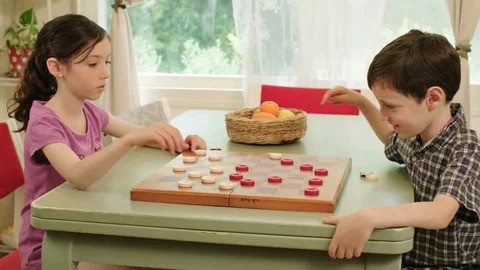
Checkers is a game of constant challenges. Each move presents a problem that requires a solution, and children must adapt to an ever-changing board. This dynamic environment fosters flexible thinking, the ability to modify strategies in response to new information. When a planned move fails, a child must quickly assess the situation and develop an alternative approach.
Problem-solving through checkers also encourages children to think creatively. While there are established strategies, there is rarely a single correct move. Kids learn to experiment with different approaches, consider multiple perspectives, and evaluate the consequences of their actions. These problem-solving skills are directly transferable to classroom learning and real-life situations, helping children develop resilience and confidence in their decision-making abilities.
Through repeated play, children learn to identify patterns of mistakes and successes, building analytical reasoning. They start to evaluate not just individual moves, but sequences of moves, considering how a single decision can ripple across the board. This higher-order thinking is particularly valuable in STEM subjects, where understanding complex, interconnected systems is essential.
Boosting Mathematical and Pattern Recognition Skills
Checkers is deceptively rich in mathematical learning opportunities. Every move involves counting, evaluating positions, and understanding sequences. Children develop early numeracy skills as they calculate jumps, assess piece distribution, and anticipate cascading captures. Beyond simple counting, checkers also teaches spatial reasoning and pattern recognition. Recognizing board configurations, predicting opponent moves, and identifying strategic formations all enhance a child’s ability to think logically and recognize patterns—skills that are foundational in subjects like geometry, algebra, and computer science.
Pattern recognition also extends to problem-solving outside the game. Children begin to see similarities between different problems and apply strategies learned in checkers to other challenges.
Encouraging Emotional Intelligence and Social Skills
While checkers is an intellectual exercise, it also has profound implications for emotional intelligence and social development. Playing the game requires children to interact with opponents, practice patience, and respect rules. Learning to win graciously and accept losses gracefully cultivates empathy, self-regulation, and interpersonal awareness.
Children also develop communication skills through discussions about the game, either by explaining strategies or negotiating friendly matches. These interactions reinforce important social cues and collaborative thinking. In essence, checkers offers an opportunity for children to practice both cognitive and emotional skills simultaneously, nurturing well-rounded development.
Moreover, experiencing victory and defeat in a safe, structured environment helps children build resilience. They learn that mistakes are part of learning and that persistence leads to improvement.
Checkers as a Classroom Tool
Educators have increasingly recognized the potential of checkers as a learning tool in classrooms. Teachers can use the game to create interactive lessons that promote critical thinking, math skills, and teamwork. Group matches encourage cooperative learning, while competitive play can motivate children to refine strategies and deepen understanding.
By integrating checkers into educational settings, children experience learning in a context that is engaging and meaningful. Unlike rote memorization or passive activities, checkers actively stimulates the mind, creating a learning environment where curiosity, experimentation, and critical thinking thrive.
Some educators even use checkers to teach concepts beyond math and strategy. For instance, lessons about consequences, probability, and ethical decision-making can be framed around gameplay scenarios, making abstract concepts tangible and memorable.
Long-Term Cognitive Benefits
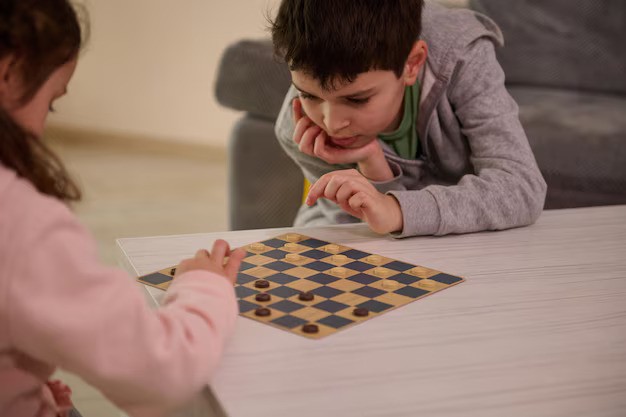
The benefits of playing checkers extend beyond childhood. Developing strategic thinking, memory, and problem-solving skills early on lays the groundwork for future academic and personal success. Children who engage in mentally stimulating games tend to develop stronger analytical skills, better decision-making abilities, and enhanced creativity as adults.
Moreover, the discipline and patience learned through checkers can support lifelong learning. Skills cultivated through play—such as evaluating options, predicting outcomes, and managing emotions—remain relevant in higher education, careers, and daily life. The seemingly simple game of checkers becomes, in essence, a lifelong investment in cognitive and emotional growth.
Making Checkers Fun and Educational
For parents and educators, the key is to balance fun with challenge. Encouraging children to experiment, reflect on their moves, and discuss strategies transforms checkers from a simple pastime into a powerful educational tool. Adapting the difficulty of matches, introducing timed challenges, or even connecting game scenarios to real-world problem-solving can further enrich the learning experience.
Ultimately, the joy of the game enhances learning. When children are motivated and engaged, cognitive development occurs naturally. Checkers, in this sense, provides a unique synergy of play and education, proving that learning doesn’t always have to come from textbooks or structured lessons.
Even casual, short games can offer meaningful learning experiences. For younger children, starting with just a few pieces on a smaller board can introduce strategic thinking in a manageable way, gradually building complexity as their cognitive skills grow.
Conclusion
Checkers may appear modest at first glance, but its educational potential is immense. By promoting strategic thinking, enhancing memory and concentration, teaching problem-solving skills, and boosting mathematical and pattern recognition abilities, checkers plays a vital role in cognitive development for children. Beyond intellectual growth, it fosters emotional intelligence, social skills, and resilience.
In an era dominated by digital distractions, checkers offers a refreshing, interactive way for children to exercise their minds. It combines mental challenge with play, creating an environment where learning is enjoyable, meaningful, and enduring. Introducing children to checkers is more than a game—it is a step toward nurturing thoughtful, intelligent, and well-rounded individuals.