

From Neorealism to Modern Minimalism in European Film
Science, technology, engineering, and mathematics—grouped under the now-ubiquitous acronym STEM—have become central to conversations about the future of education, work, and society. This emphasis is not arbitrary. STEM fields drive innovation, economic growth, healthcare advancements, infrastructure, and nearly every aspect of modern life. Yet despite the importance placed on STEM, many schools still struggle to support it effectively. The challenge is not a lack of enthusiasm or awareness, but rather systemic gaps in resources, pedagogy, equity, and long-term vision.
Supporting STEM education is not simply about adding more math or science classes to a timetable. It requires rethinking how learning happens, how teachers are supported, how students are motivated, and how schools connect knowledge to the real world. When done well, STEM education empowers students to think critically, solve complex problems, collaborate across disciplines, and adapt to technologies that may not even exist yet. When done poorly, it becomes a gatekeeping mechanism that discourages curiosity and reinforces inequality.
To truly strengthen STEM education, schools must take a holistic approach—one that addresses curriculum design, teacher development, student engagement, infrastructure, and community partnerships. The following sections explore key areas where schools can make meaningful improvements, not through quick fixes, but through sustained, intentional change.
Rethinking Curriculum to Emphasize Depth, Relevance, and Integration
One of the most significant barriers to effective STEM education is an outdated or fragmented curriculum. In many schools, STEM subjects are taught in isolation, focusing heavily on memorization and standardized testing rather than understanding and application. This approach often leaves students disengaged and unable to see how their learning connects to real-world problems. A stronger STEM curriculum prioritizes depth over breadth and relevance over rote coverage.
Instead of racing through long lists of topics, schools can focus on fewer concepts taught more deeply. This allows students to explore the “why” and “how” behind scientific principles or mathematical models, rather than just the “what.” For example, understanding the core ideas of energy transfer or data analysis can be far more valuable than briefly touching on dozens of disconnected concepts. Depth builds confidence, and confidence encourages persistence—especially in subjects that students often find intimidating.
Relevance is equally important. Students are more likely to engage with STEM when they can see how it applies to their lives and communities. Incorporating real-world problems—such as climate change, public health, or local engineering challenges—helps students understand that STEM is not abstract or distant. For example, a project designing sustainable clothing could connect students with a veteran clothing brand, showing practical applications of STEM in industry and entrepreneurship. When students recognize STEM as a tool for solving meaningful problems, motivation naturally increases.
Integration across disciplines is another crucial shift. Real-world challenges rarely fit neatly into a single subject area, yet schools often separate science, math, and technology into rigid silos. Integrated STEM projects that combine coding with physics, or biology with statistics, better reflect how professionals actually work. This approach also helps students see connections between subjects, reinforcing learning rather than compartmentalizing it.
By redesigning curricula to be deeper, more relevant, and more integrated, schools can move STEM education away from passive consumption and toward active understanding. This shift lays the foundation for everything else that effective STEM support requires.
Investing in Teacher Preparation and Ongoing Professional Development
Even the most well-designed curriculum will fall short without confident, well-supported teachers. Educators are the backbone of STEM education, yet many are asked to teach rapidly evolving subjects with limited training or resources. Supporting STEM education means investing seriously in the people responsible for delivering it.
Many teachers, especially at the elementary and middle school levels, report feeling underprepared to teach STEM subjects, particularly technology and engineering. This lack of confidence can unintentionally translate into rigid instruction, avoidance of hands-on activities, or an overreliance on textbooks. Initial teacher preparation programs must place greater emphasis on STEM content knowledge and pedagogy, ensuring that educators enter the classroom with both understanding and confidence.
However, preparation cannot stop at certification. STEM fields evolve quickly, and teachers need ongoing professional development to keep pace. Effective professional learning is not a one-off workshop, but a sustained process that includes collaboration, experimentation, and reflection. Schools can support this by providing time for teachers to learn together, share strategies, and analyze student work related to STEM learning.
Equally important is professional development focused on pedagogy, not just content. Teaching STEM effectively requires skills such as facilitating inquiry, managing project-based learning, and encouraging productive struggle. Teachers need support in shifting from lecture-based instruction to more student-centered approaches, especially in classrooms where standardized testing pressures remain strong.
Access to instructional coaches, partnerships with universities, and connections to industry professionals can further enrich teacher learning. When educators feel supported and valued, they are more willing to try new approaches and take instructional risks. In turn, students benefit from classrooms that are dynamic, responsive, and rooted in genuine enthusiasm for STEM subjects.
Ultimately, strengthening STEM education starts with empowering teachers. Without that investment, even the most ambitious reforms are unlikely to succeed.
Creating Inclusive and Equitable STEM Learning Environments
A critical, and often overlooked, aspect of STEM education is equity. Historically, access to high-quality STEM learning has been uneven, with students from marginalized backgrounds facing systemic barriers. Schools cannot claim to support STEM education if that support only reaches a narrow segment of the student population.
Inclusive STEM education begins with representation. Students are more likely to envision themselves in STEM fields when they see people like them reflected in the curriculum. This includes highlighting scientists, engineers, and innovators from diverse backgrounds, as well as addressing the social and ethical dimensions of STEM work. Representation sends a powerful message about who belongs and who can succeed.
Equity also involves access to resources. Advanced courses, modern technology, and extracurricular opportunities such as robotics clubs or science fairs are often concentrated in well-funded schools. Schools and districts must work to ensure that all students, regardless of zip code, have access to high-quality STEM experiences. This may require targeted funding, shared resources, or partnerships with external organizations.
Classroom culture plays an equally important role. STEM subjects are often perceived as “weed-out” disciplines, where struggle is seen as failure rather than a natural part of learning. This mindset disproportionately affects students who already feel marginalized. Creating a culture that normalizes mistakes, values curiosity, and rewards persistence is essential for inclusive STEM education.
Language and assessment practices also matter. Overemphasis on speed, competition, or high-stakes testing can discourage students who might otherwise thrive in collaborative or exploratory environments. Offering multiple ways to demonstrate understanding—through projects, presentations, or experiments—helps recognize diverse strengths and learning styles.
By intentionally designing STEM learning environments that are inclusive and equitable, schools not only broaden participation but also enrich the field itself. Diverse perspectives lead to better questions, more creative solutions, and more ethical applications of STEM knowledge.
Expanding Access to Hands-On, Experiential Learning
STEM education thrives when students can engage directly with materials, tools, and real-world challenges. Yet in many schools, learning remains largely theoretical, constrained by time, testing requirements, or limited resources. Hands-on, experiential learning is not an optional add-on—it is central to effective STEM education.
Laboratory experiments, engineering challenges, coding projects, and design-based tasks allow students to apply abstract concepts in tangible ways. These experiences deepen understanding and help students retain knowledge longer. More importantly, they mirror how STEM work is actually done, emphasizing iteration, problem-solving, and collaboration.
Experiential learning also fosters critical skills that extend beyond content knowledge. Students learn how to ask questions, test hypotheses, analyze data, and communicate results. They develop resilience by encountering setbacks and learning to adjust their approach. These skills are invaluable, regardless of whether students ultimately pursue STEM careers.
Technology can play a powerful role in expanding hands-on learning opportunities. Simulations, virtual labs, and data analysis tools can supplement physical resources, particularly in schools with limited budgets. However, technology should be used thoughtfully, as a means to enhance exploration rather than replace it. The goal is active engagement, not passive screen time.
Partnerships with local businesses, universities, and community organizations can further enrich experiential learning. Internships, mentorship programs, and real-world projects expose students to authentic STEM applications and career pathways. These experiences demystify STEM professions and help students understand the relevance of their education.
By prioritizing hands-on, experiential learning, schools transform STEM from a set of abstract requirements into a lived experience. This shift not only improves learning outcomes but also inspires students to see themselves as capable problem-solvers and innovators.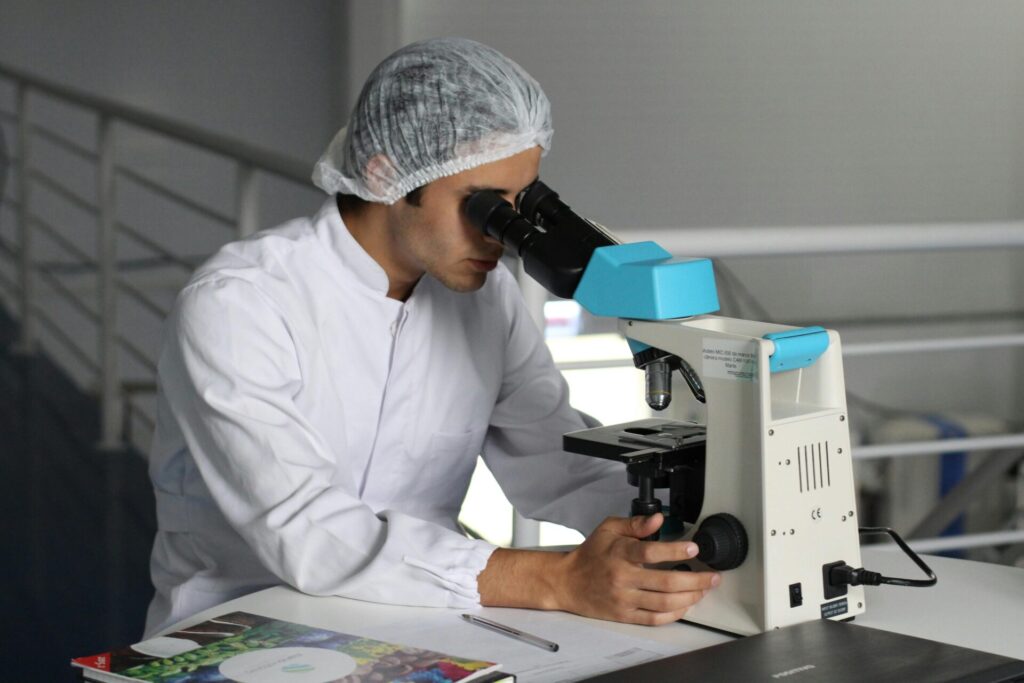
Conclusion: Moving From Aspiration to Action
Supporting STEM education is not about chasing trends or responding to workforce demands alone. It is about equipping students with the skills, confidence, and curiosity they need to navigate an increasingly complex world. Achieving this requires more than isolated programs or policy statements. It demands a comprehensive, equity-focused approach that aligns curriculum, teaching, resources, and community engagement.
When schools rethink what and how they teach, invest in educators, prioritize inclusion, expand experiential learning, and build strong partnerships, STEM education becomes more than a subject area. It becomes a powerful framework for learning and growth. The challenge is significant, but so is the opportunity. With intentional effort and sustained commitment, schools can transform STEM education from a barrier into a bridge—connecting students to possibility, purpose, and a future they are prepared to shape.