

Cracking the Code: How Kakuro Boosts Kids’ Math and Logic Skills
When parents and teachers search for ways to make learning mathematics both enjoyable and effective, they often encounter roadblocks. Children may see math as dry, repetitive, or intimidating. Yet, beneath the surface of traditional instruction lies a world of puzzles that blend entertainment with education. One of the most powerful yet underrated tools in this space is Kakuro, a number puzzle game that has been captivating problem-solvers for decades. While Sudoku often takes the spotlight, Kakuro offers a unique blend of arithmetic and logic that makes it especially beneficial for young learners. For kids, playing Kakuro is not just fun—it’s an opportunity to enhance math fluency, sharpen reasoning, and develop persistence in problem-solving.
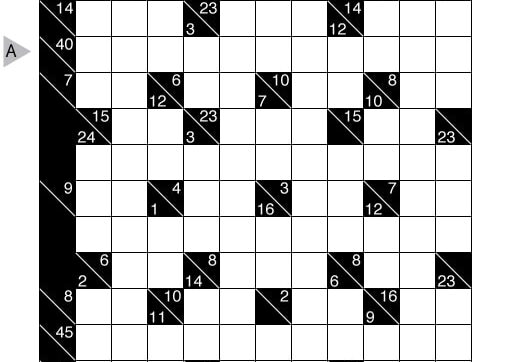
What Exactly Is Kakuro?
Kakuro is sometimes described as a “mathematical crossword.” Instead of filling letters into squares, players insert numbers that must add up to given clues. The rules are simple yet deceptively challenging: each row and column has a target sum, and players must fill the blank squares with digits from 1 to 9, without repeating numbers in that row or column. The satisfaction comes from the process of deduction, testing possibilities, and finally arriving at a solution. Much like choosing the right winter apparel for comfort and function, solving Kakuro requires balance, precision, and thoughtful strategy.
For kids, the beauty of Kakuro lies in its dual nature. On the surface, it feels like a puzzle or game that challenges them in the same way a riddle does. Underneath, it’s quietly reinforcing fundamental mathematical skills—addition, number sense, and logical reasoning. The blend of play and learning is what makes Kakuro so educationally powerful.
Kakuro as a Math Confidence Builder
One of the most common struggles children face with mathematics is confidence. Numbers can feel abstract, and when mistakes happen, many children quickly decide they’re “bad at math.” Kakuro changes this dynamic by providing a playful, low-stakes environment.
When a child sits down to solve a Kakuro puzzle, the problem is framed as a challenge rather than a test. The thrill of figuring out which numbers go where turns the experience into a game of discovery. Every small success—filling in a correct sequence, unlocking a row, or completing a puzzle—gives kids a sense of achievement. These small wins build momentum, gradually shifting their perspective from “I can’t do math” to “I can figure this out.”
Confidence in math doesn’t come from memorizing formulas alone; it grows through repeated positive experiences of solving problems. Kakuro provides exactly that kind of practice.
Developing Core Arithmetic Skills
At its heart, Kakuro is about addition. The game requires children to calculate sums quickly, consider different combinations of numbers, and recall which groupings work together. For example, if a row requires a total of 16 across three squares, a child must determine which digits between 1 and 9 can create that total without repeating numbers.
This seemingly simple exercise has profound effects. Kids practice mental addition repeatedly without even realizing it. Over time, they begin to internalize common number patterns—such as knowing instantly that 7 can be made from 4 and 3 or 5 and 2. These number bonds are the foundation of more advanced arithmetic and algebra.
The difference between traditional math drills and Kakuro is that in drills, children are often passive, simply filling in answers. In Kakuro, they are active problem-solvers. Their brains are constantly searching, testing, and calculating, which strengthens both speed and accuracy in arithmetic.
Enhancing Logical Thinking
Beyond raw calculation, Kakuro sharpens logic. Kids must not only find numbers that add up to a target but also ensure those numbers fit within the broader puzzle. This requires them to think critically and strategically.
For instance, if a column allows only a total of 6 across two squares, and one of the squares already shares a row that requires a 9, the child must deduce the correct placement without contradicting either clue. This juggling of possibilities encourages flexible thinking and the ability to hold multiple constraints in mind at once.
Such logical reasoning skills extend far beyond math class. They nurture a mindset that can tackle problems systematically, break challenges into smaller parts, and persevere through uncertainty—abilities valuable in science, reading comprehension, and even real-life decision-making.
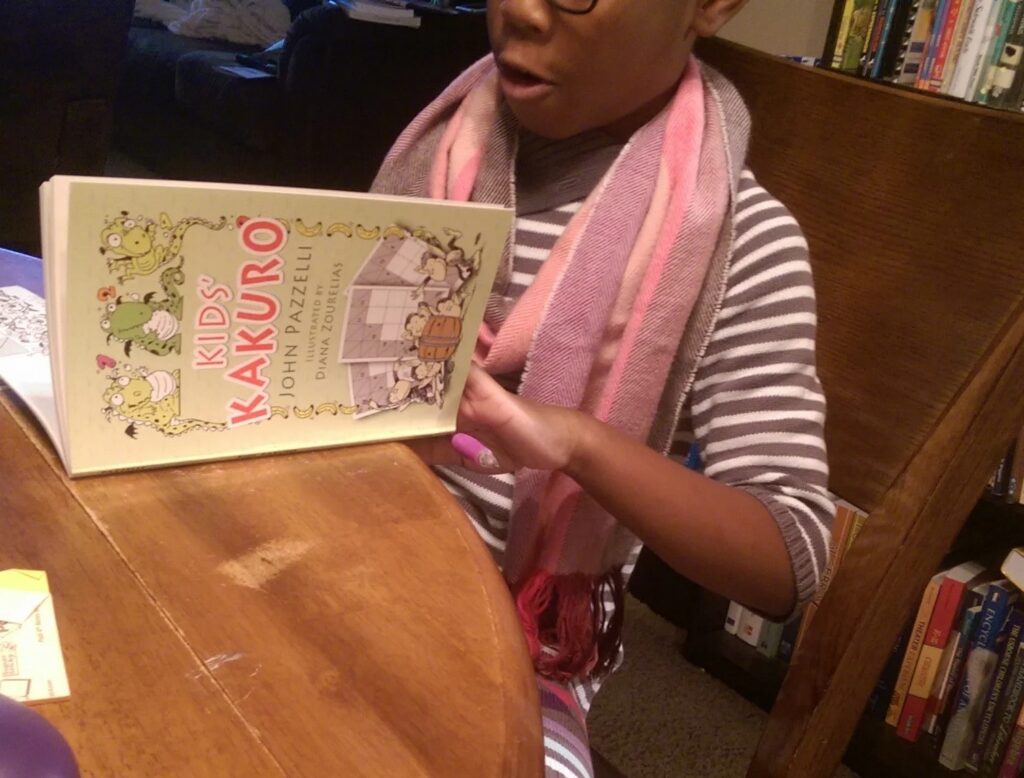
Kakuro and Focused Attention
Modern education often competes with short attention spans. Kids today are surrounded by digital distractions, making sustained focus a rare commodity. Kakuro naturally cultivates concentration.
Because each puzzle requires careful thought and patience, children learn to sit with a challenge rather than give up quickly. The structured nature of the puzzle rewards persistence; skipping ahead rarely works, so they must work step by step. Over time, this builds endurance in concentration, a skill directly transferable to studying, reading, and other academic pursuits.
Parents often note that once children get into Kakuro, they can spend surprising amounts of time deeply engaged. This kind of focus is difficult to force in traditional learning but arises naturally when curiosity and play are at the center.
Kakuro as a Collaborative Learning Tool
Although Kakuro is usually played individually, it can be turned into a collaborative exercise. Teachers can use puzzles in the classroom by pairing students together or forming small groups. Working through sums as a team encourages communication, peer teaching, and cooperative problem-solving.
When kids explain their reasoning to others, they not only help their peers but also reinforce their own understanding. Collaborative Kakuro sessions become lively discussions about numbers, strategies, and possibilities. In this way, the puzzle becomes more than an individual pursuit—it becomes a shared learning journey.
At home, families can also make Kakuro part of game night. Solving puzzles together strengthens bonds and allows parents to model perseverance, showing kids that making mistakes and trying again are part of the process.
Digital Kakuro in the Age of Screens
Some parents worry about kids spending too much time on digital devices. But digital Kakuro apps and online puzzles can transform screen time into a constructive activity. Many platforms offer interactive features, hints, and difficulty levels that grow with the child’s skill.
Unlike passive gaming, where children consume entertainment, playing Kakuro digitally still engages their brains actively. The game retains its educational power while offering the accessibility and convenience of modern technology. For reluctant learners, presenting Kakuro in a digital format may even make the puzzle more appealing.
Beyond Numbers: Teaching Resilience and Patience
Perhaps one of the most underrated benefits of Kakuro for kids is the way it teaches patience. In an age of instant gratification, Kakuro reminds children that not every answer comes quickly. Sometimes they must erase, try again, and re-think their approach.
This practice of persistence mirrors real-life problem-solving. Whether it’s tackling a difficult homework assignment, learning to play an instrument, or facing challenges later in life, kids who develop patience through puzzles like Kakuro are better equipped to handle setbacks. They learn that frustration is not a signal to quit, but a sign that growth is happening.
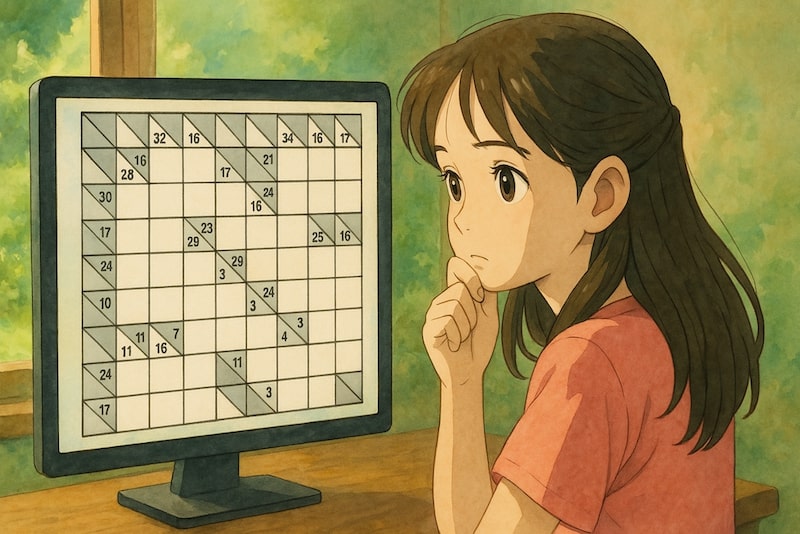
Why Kakuro Belongs in Every Child’s Education
Despite its clear benefits, Kakuro is still underutilized in classrooms compared to more well-known puzzles. Yet its potential to combine fun with meaningful learning makes it a perfect fit for education. By incorporating Kakuro into school curricula, teachers can make math more approachable and engaging. For parents, introducing the puzzle at home is a way to supplement learning without resorting to more worksheets or drills.
Kids who grow up with Kakuro don’t just become quicker at arithmetic. They become thinkers—children who can approach challenges creatively, reason through obstacles, and persist until they succeed. In many ways, the puzzle is less about teaching numbers and more about cultivating the mindset of a problem-solver.
The Joy of Cracking the Code
Ultimately, what makes Kakuro magical for kids is the sense of discovery. Each puzzle is a code waiting to be cracked, a mystery that rewards persistence and clever thinking. When children experience the rush of completing a difficult puzzle, they are not only having fun—they are wiring their brains for deeper mathematical understanding and logical reasoning.
Kakuro shows kids that numbers are not just abstract symbols in a textbook. They are tools, pieces of a puzzle, and part of an adventure. By engaging with Kakuro, children learn that math can be playful, rewarding, and deeply satisfying. For parents and teachers searching for ways to make math stick, few tools are as powerful as this timeless game.
In a world where confidence in math often predicts long-term academic success, giving kids access to Kakuro is more than entertainment. It is an investment in their future, teaching them to think critically, focus deeply, and embrace the joy of solving problems. When kids learn to crack Kakuro, they’re not just cracking a puzzle—they’re cracking the code to lifelong learning skills.