
There’s something almost magical about watching a child sit before a jigsaw puzzle — tiny hands turning colorful pieces, eyes narrowing in concentration, a mix of curiosity and determination lighting up their face. What seems like simple play is, in truth, one of the most quietly powerful learning experiences a child can have. Jigsaw puzzles are far more than a pastime; they are intricate cognitive exercises that help build foundational skills essential for lifelong learning. In every piece a child fits together, there’s problem-solving, patience, creativity, and critical thinking taking shape.
The Beauty of Learning Through Play
Children learn best when they don’t even realize they’re learning. This is the secret strength of jigsaw puzzles. They blur the line between play and education, creating an environment where learning is natural, joyful, and self-motivated. When a child tackles a puzzle, they’re not memorizing or repeating information — they’re discovering patterns, testing ideas, and building connections.
This hands-on engagement makes puzzles uniquely effective. Unlike many educational tools that rely heavily on instruction, puzzles encourage exploration and independence. The satisfaction of completing an image from chaos gives children a sense of achievement and mastery, reinforcing the pleasure of learning itself. This is not rote education; this is learning that grows from within, piece by piece.
Cognitive Development One Piece at a Time
At the heart of jigsaw puzzles lies a rich cognitive workout. Each puzzle piece challenges the brain to process visual information, detect patterns, and use logic. For children, this translates into significant growth in areas like spatial reasoning, visual memory, and problem-solving skills.
When a child looks at a pile of puzzle pieces, they must visualize how shapes fit together. They begin to mentally rotate the pieces, testing how edges align, how colors blend, and where certain patterns belong. This visual-spatial reasoning is a cornerstone of subjects like mathematics, engineering, and even art. Children who develop this ability early on tend to excel later in geometry, design, and analytical thinking.
At the same time, puzzles strengthen short-term memory. Kids remember the shapes, colors, and patterns they’ve already examined and use that memory to test new combinations. It’s a subtle but effective way to train the brain to retain and retrieve information — a skill that directly benefits reading comprehension and mathematical problem-solving later in school.
Building Patience and Perseverance
We live in an age of instant gratification, where screens deliver rewards at lightning speed. Yet learning doesn’t always work that way — and neither do puzzles. Jigsaw puzzles teach children the art of delayed gratification and persistence. There are no shortcuts to finishing a puzzle. Success requires focus, effort, and a willingness to try, fail, and try again.
Every moment a child spends searching for that one elusive piece is a small lesson in patience. Each time they resist the urge to give up, they’re strengthening emotional muscles that will serve them in every aspect of life. Completing a puzzle delivers a deep sense of satisfaction, not because it was easy, but because it required time and dedication. Through play, children internalize one of the most powerful life lessons: effort and persistence lead to achievement.
Puzzles as Tools for Logical Thinking
Beneath the bright colors and charming images, jigsaw puzzles are built on logic. They teach children how to analyze, strategize, and reason their way to a solution. As kids begin, they might randomly try to fit pieces together, but as they progress, they start forming mental systems: finding corner pieces, sorting by color or shape, and recognizing patterns that make problem-solving more efficient.
This natural progression mirrors how logical thinking develops in academics. In math, for instance, children learn to identify relationships and sequences, much like they do when determining where a puzzle piece fits. Puzzles also teach them to think ahead — to consider what will happen when they make one choice over another. In this way, they are training their brains to approach challenges methodically, an essential skill for everything from science experiments to reading comprehension.
Enhancing Fine Motor Skills and Hand-Eye Coordination
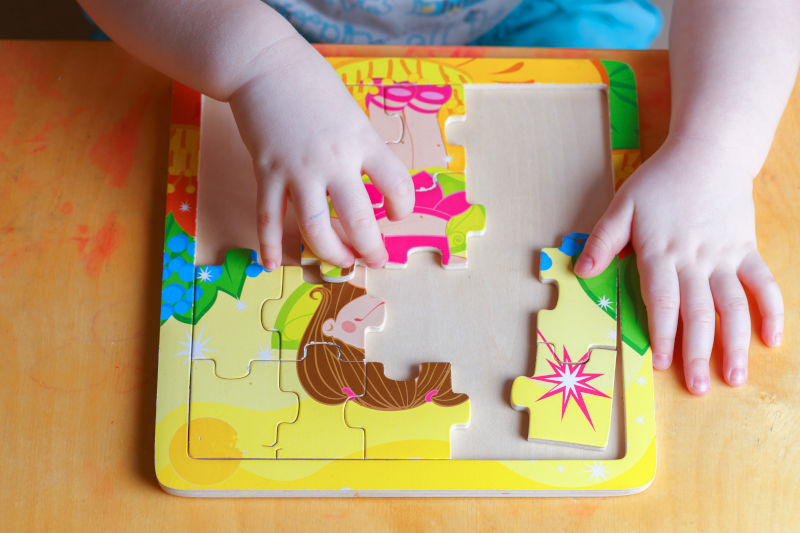
For younger children especially, jigsaw puzzles are a powerful way to refine fine motor skills. Picking up, rotating, and fitting pieces together requires precise finger movements and hand-eye coordination. Every time a child adjusts a piece to find the perfect fit, they’re improving dexterity and control.
This kind of physical interaction with learning materials is invaluable in early childhood development. It strengthens the small muscles in the hands and fingers that later support writing, drawing, and even using technology. But beyond the physical benefits, there’s also a sense of control and confidence that comes from successfully manipulating the pieces. The mind and body work in harmony — an essential foundation for future academic success.
Emotional Growth and Confidence Building
One of the most overlooked benefits of jigsaw puzzles is the emotional confidence they build. Completing a puzzle isn’t just an intellectual victory — it’s an emotional one. Every piece found, every section completed, reinforces a child’s sense of competence and capability. The act of finishing a puzzle teaches children that they can overcome challenges with patience and persistence.
Puzzles also provide a safe space for failure. When a piece doesn’t fit, it’s not a loss; it’s an opportunity to try again. This gentle cycle of trial and correction helps children develop resilience. They learn that making mistakes is part of the process — a lesson that will serve them far beyond their playtime.
Social and Collaborative Learning
While puzzles can be a solitary activity, they often become a social one, and that’s where their educational value multiplies. When children work together on a puzzle, they practice communication, teamwork, and negotiation. They learn to share ideas, listen to others, and appreciate different perspectives.
In group puzzle play, children divide tasks naturally — some focus on sorting colors, others on assembling borders or specific sections. Through this cooperation, they develop empathy, patience, and the ability to celebrate collective success. These are core social-emotional skills that will shape how they collaborate in classrooms, workplaces, and relationships later in life.
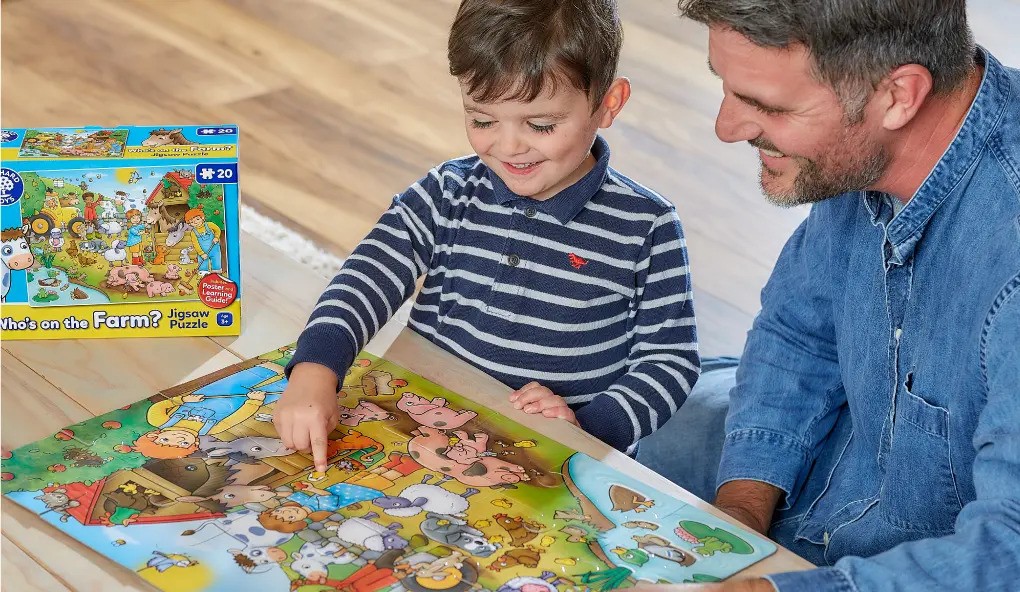
Puzzles can also strengthen family bonds. Parents who sit down with their children to complete a puzzle are engaging in an intimate learning experience. The quiet focus, shared goals, and mutual encouragement create an atmosphere of connection and warmth.
The Educational Power of Themed Puzzles
Not all puzzles are created equal, and their educational potential can be amplified through thoughtful design. Themed puzzles—those featuring numbers, letters, animals, maps, or historical scenes—can enhance subject-specific learning while keeping play engaging.
A child assembling a puzzle of the solar system, for example, naturally learns about the planets’ names and positions. A world map puzzle introduces geography, helping them recognize countries and continents. Alphabet or number puzzles turn early literacy and numeracy into tactile exploration. The key is that children absorb this knowledge passively through play, without pressure or boredom.
This makes puzzles a versatile tool for teachers and parents alike. They can adapt puzzle play to complement formal lessons, reinforcing academic concepts through enjoyable, hands-on experiences.
The Digital Dimension: Puzzles in the Modern Age
The digital revolution hasn’t left puzzles behind. Online and app-based jigsaw puzzles have opened new ways for children to engage with this age-old game. These virtual versions still offer many of the same cognitive benefits as traditional puzzles, with the added advantage of interactive sound, animation, and progressive difficulty levels.
However, while digital puzzles are excellent tools, the tactile experience of handling physical pieces provides sensory feedback that screens cannot replicate. The feeling of touch, texture, and movement connects the child’s body to their learning process in a deeply rooted way. The best approach may be balance — combining digital puzzles for accessibility and variation with physical puzzles for hands-on engagement and sensory development.

Turning Playtime into Lifelong Learning
The educational journey that begins with a jigsaw puzzle doesn’t end when the last piece clicks into place. The skills learned through puzzles — critical thinking, patience, spatial awareness, and collaboration — translate seamlessly into everyday life and future learning. Children who engage with puzzles regularly often demonstrate better concentration, improved problem-solving ability, and greater self-confidence in tackling challenges.
Even more importantly, puzzles nurture a mindset of curiosity and exploration. They teach children to see patterns in chaos, to look closer when something doesn’t make sense, and to believe that every problem has a solution waiting to be discovered. This growth mindset, cultivated in the simplest of games, lays the foundation for lifelong learning.
The Endless Value of Simple Games
In an age dominated by high-tech toys and fast-paced entertainment, it’s worth remembering the enduring value of something as simple as a jigsaw puzzle. It doesn’t flash or beep, and it doesn’t require an internet connection. Yet it holds within it the timeless mechanics of learning — curiosity, challenge, discovery, and satisfaction.
Jigsaw puzzles remind us that education doesn’t have to be complicated to be effective. Sometimes, the most profound lessons come from the simplest activities. Through play, children build the mental, emotional, and social frameworks that prepare them for the complexities of the world ahead. And as each puzzle piece falls into place, so too do the pieces of a developing mind, connecting fun with foundational skills that last a lifetime.