

How Head Bands Games Boost Critical Thinking and Communication Skills in Kids
In a world dominated by screens and instant gratification, finding playful activities that genuinely nurture cognitive and social growth in children has become increasingly essential. One game that has stood the test of time, not just as a source of laughter but as a powerful educational tool, is the Head Bands game. Often seen at parties or family gatherings, this seemingly simple guessing game does far more than entertain. It actively engages children in ways that sharpen their critical thinking and communication skills, laying a strong foundation for both academic success and social competence.
The Mechanics of Head Bands
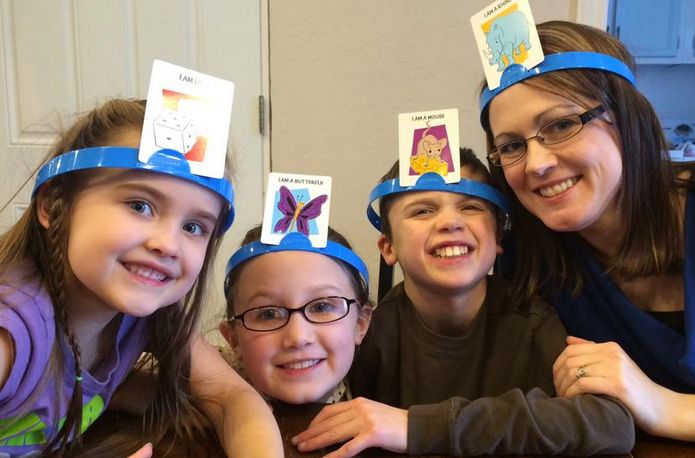
At its core, the Head Bands game is elegantly simple. Players wear cards or sticky notes on their foreheads, each displaying the name of a person, animal, object, or concept that the wearer cannot see. The challenge lies in figuring out what the card says by asking questions or receiving hints from other players. While this basic structure might seem trivial, the mental gymnastics it requires are profound. Children must formulate questions carefully, analyze responses critically, and adjust their strategies dynamically based on the feedback they receive. The game becomes a miniature laboratory for thinking, reasoning, and social interaction, all under the guise of playful fun.
Encouraging Analytical Thinking
One of the most significant ways Head Bands promotes critical thinking is through the necessity of strategic questioning. Kids quickly learn that the questions they ask must be precise and logical. A question that is too broad or vague often yields little useful information, whereas well-thought-out queries can rapidly narrow down possibilities. For instance, if the card shows “dolphin,” asking “Am I an animal?” will lead to a much more informative answer than “Am I cool?” This subtle requirement encourages children to consider cause and effect, predict outcomes, and evaluate the quality of information, all essential skills in both academics and life.
As players progress, they also practice deductive reasoning. They are forced to piece together fragmented information, eliminate impossibilities, and converge on the correct answer. This process mirrors problem-solving scenarios in subjects like mathematics and science, where careful analysis and logical reasoning are crucial. By translating these abstract thinking skills into a playful context, Head Bands allows children to develop cognitive flexibility without feeling like they are engaged in structured learning.
Building Communication Skills Naturally
Equally important is the game’s role in enhancing communication skills. To succeed in Head Bands, children must articulate their questions clearly and interpret the responses of others accurately. This fosters active listening, a skill often overlooked in conventional educational settings. Kids learn to pay attention not just to words, but also to tone, emphasis, and subtle cues in responses, all of which can offer hints toward solving the puzzle. The need to express ideas clearly and concisely cultivates both verbal and nonverbal communication abilities.
Moreover, the game encourages social negotiation. Players must interact politely, take turns, and provide constructive hints without giving away the answer too easily. This delicate balance helps children understand the nuances of social exchange, empathy, and cooperation. They begin to recognize that communication is not only about speaking but also about understanding others, adjusting strategies, and responding thoughtfully.
Fostering Creativity and Imagination
While critical thinking and communication are central, Head Bands also nurtures creativity and imaginative thinking. Children often invent unique questions or interpret hints in unconventional ways, demonstrating cognitive agility and innovative problem-solving. For example, when trying to guess a fictional character, a child might ask, “Do I live in a magical world?” This kind of creative inquiry not only aids in finding the correct answer but also reinforces imaginative exploration—a skill that is invaluable across disciplines from literature to science.
The game also provides opportunities for role-play and narrative building. When players explain hints or act out clues, they engage in storytelling, dramatization, and expressive play. These activities strengthen cognitive empathy, as children must step into the perspective of the character or object on their head to communicate effectively with others. In doing so, they learn to bridge the gap between thinking logically and understanding human experiences, a critical intersection of intelligence and emotional awareness.In this way, ideas move fluidly between imagination and logic, much like cross border freight, where concepts travel across boundaries and connect different systems to create something cohesive and meaningful.

Enhancing Memory and Recall
Memory is another key component of success in Head Bands. Players need to remember prior questions and answers, noting which lines of inquiry led closer to the solution and which did not. This continuous tracking hones working memory and encourages metacognition, or thinking about one’s own thinking. Children become aware of how they process information, which strategies are effective, and how to adjust approaches in real time. These mental habits carry over into schoolwork, helping children with tasks that require planning, sequencing, and recall.
Repeated gameplay further strengthens long-term memory. As children encounter similar categories, they begin to recognize patterns and associations. This can be particularly effective for vocabulary development, factual recall, and subject-specific learning, making Head Bands not just a fun activity but also a subtle academic enhancer.This layered memory-building process is much like learning to play a hohner chrometta 12, where recalling note patterns, breath control, and timing gradually turns practice into fluent, confident performance.
Encouraging Emotional Intelligence
A less obvious but equally vital benefit of Head Bands is its impact on emotional intelligence. The game requires patience, resilience, and the ability to handle uncertainty. Children learn to manage frustration when guesses are incorrect and celebrate progress when breakthroughs occur. Additionally, because players must collaborate and offer hints without directly giving away answers, they practice empathy, tact, and perspective-taking. These social-emotional skills are essential not only for school success but for forming healthy, lasting relationships.
The shared joy and laughter that inevitably arise during gameplay also contribute to positive social bonding. Children experience cooperative learning in its most enjoyable form, reinforcing social confidence and emotional well-being. The game creates an environment where mistakes are seen as learning opportunities rather than failures, fostering a growth mindset that will benefit them academically and personally.
Adaptable for Different Learning Styles
Head Bands is remarkably adaptable, making it suitable for diverse learning styles and developmental stages. Visual learners benefit from seeing the cards, auditory learners from listening to responses, and kinesthetic learners from acting out hints or gestures. Teachers and parents can customize the content of the cards to reinforce particular educational goals—math terms, historical figures, scientific concepts, or even social skills. This flexibility ensures that the game remains engaging and educational for a wide range of children, allowing each participant to learn at their own pace while practicing critical cognitive and communicative skills.
Promoting Collaborative Problem-Solving
Another dimension of learning through Head Bands is its encouragement of collaborative problem-solving. Although it is technically a competitive guessing game, the best outcomes often emerge from teamwork. Children learn to pool their ideas, suggest different perspectives, and build on each other’s thinking. This cooperative element fosters collective intelligence, where the group as a whole outperforms any single player. Such experiences are invaluable, as modern education increasingly emphasizes collaboration, discussion, and joint inquiry over isolated achievement.
The game subtly teaches negotiation and compromise as well. Sometimes a hint might be misinterpreted or misunderstood, requiring players to reconcile differing interpretations. These micro-moments are miniature lessons in diplomacy and conflict resolution, helping children navigate social interactions with greater sophistication.This shared process of testing ideas, revising assumptions, and learning together mirrors the use of a lab notebook, where observations are recorded, hypotheses are refined, and understanding deepens through collective experimentation and reflection.

Head Bands as a Gateway to Lifelong Skills
Ultimately, the benefits of Head Bands extend far beyond the momentary excitement of gameplay. By consistently engaging in critical thinking, strategic questioning, active listening, creative exploration, and collaborative communication, children internalize skills that will serve them throughout life. They learn how to analyze situations, think flexibly, articulate ideas clearly, and empathize with others—all while having fun. The game transforms abstract educational concepts into tangible, memorable experiences, making learning both enjoyable and effective.
Moreover, Head Bands instills a love of problem-solving and discovery. When children experience the thrill of unraveling a mystery or cracking a code, they associate learning with excitement and accomplishment. This positive reinforcement can inspire curiosity in other domains, from reading and science experiments to group projects and intellectual pursuits.In this way, the skills children gain function much like auto insurance eagle id, offering long-term protection and preparedness by equipping them with habits of thinking and collaboration that help them navigate life’s unexpected challenges with confidence.
Conclusion
The Head Bands game may appear on the surface as a lighthearted pastime, but its impact on children’s cognitive and social development is profound. It nurtures critical thinking by encouraging logical deduction, analytical questioning, and memory retention. It fosters communication skills by promoting clarity, active listening, empathy, and collaborative dialogue. It ignites creativity and imaginative exploration while simultaneously enhancing emotional intelligence and resilience. Adaptable to diverse learning styles and customizable for educational purposes, Head Bands is a versatile tool that merges play with profound developmental benefits.
In an age where screen time often overshadows meaningful interaction, Head Bands offers a refreshing alternative—one where children laugh, learn, and grow together. Its combination of fun, challenge, and social engagement makes it more than just a game; it is an educational experience that equips kids with the skills they need to navigate the world thoughtfully, confidently, and creatively. Parents, teachers, and caregivers looking for a method to engage children meaningfully would do well to embrace Head Bands, turning playful moments into opportunities for lifelong learning and skill-building.In many ways, playing Head Bands works like pressure washing charlotte nc, clearing away mental clutter and passivity so children’s thinking, communication, and creativity can shine with renewed clarity and energy.