

Gamifying Education: How Association Games Turn Boring Lessons into Exciting Challenges
In the landscape of modern education, keeping children engaged has always been a formidable challenge. Traditional classroom methods often rely heavily on rote memorization and passive learning, leaving students bored and uninspired. However, the concept of gamifying education has emerged as a powerful tool to transform learning into a dynamic, interactive, and enjoyable experience. Among the various educational games available, association games stand out as a particularly effective method for turning mundane lessons into thrilling intellectual challenges.
Association games are built around a simple yet profoundly effective principle: linking ideas, words, or concepts to one another. This could involve connecting words that share meanings, pairing images with corresponding terms, or finding relationships between seemingly unrelated concepts. While the mechanics may appear straightforward, the cognitive benefits are profound. Children are not merely memorizing facts—they are training their brains to recognize patterns, make connections, and think creatively. By embedding learning into a game format, association games ignite curiosity and transform knowledge retention from a chore into an adventure.
The Science Behind Association Games
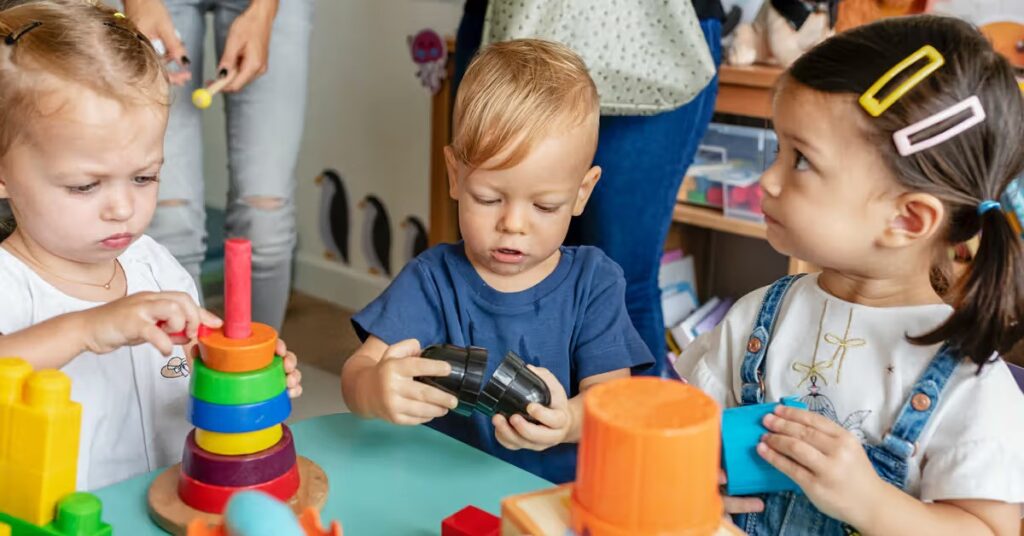
The effectiveness of association games is deeply rooted in cognitive science. Human memory thrives on connections; we remember information far better when it is linked to something familiar or meaningful. Psychologists refer to this as the principle of associative learning, where the mind naturally forms links between ideas, concepts, and experiences. When children play association games, they are engaging in this very process, creating mental pathways that strengthen memory and understanding.
Moreover, association games encourage critical thinking and problem-solving skills. Unlike rote memorization, these games require children to actively analyze relationships, categorize information, and anticipate outcomes. For example, when asked to match a historical event with its corresponding figure or a scientific term with its definition, children must synthesize knowledge from multiple sources. This dynamic engagement deepens comprehension and encourages flexible thinking, which are essential skills in both academic and real-world contexts.
Turning Lessons into Challenges
One of the most powerful aspects of association games is their ability to transform otherwise dull lessons into interactive challenges. Mathematics, for example, often intimidates students with abstract numbers and formulas. By introducing association games where children link equations with real-world problems or connect geometric shapes with everyday objects, educators can convert abstract concepts into tangible, relatable experiences. Suddenly, learning is no longer a passive activity but a stimulating challenge that invites exploration and discovery.
Language learning also benefits tremendously from association games. Vocabulary acquisition becomes more effective when children match words to images, synonyms, or contextual phrases. Beyond memorization, these games enhance comprehension and encourage children to use new words in meaningful sentences. Reading and writing skills improve naturally, as students are constantly forming connections between ideas and their linguistic expressions. The process becomes immersive and enjoyable, making language a playground rather than a textbook-bound task.
Association Games for Different Learning Styles
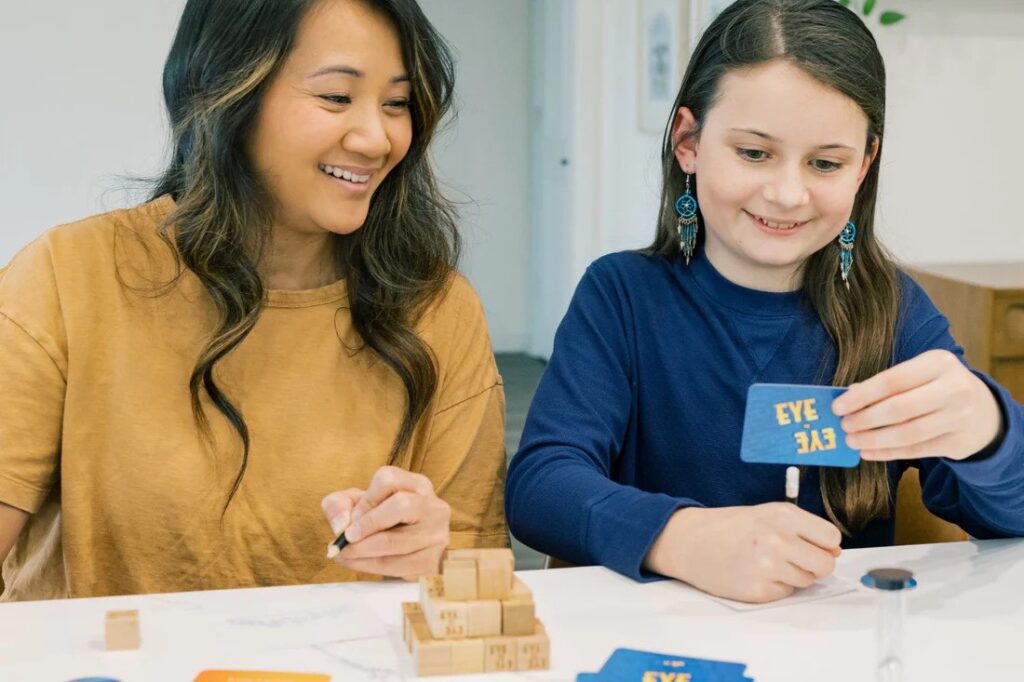
Every child learns differently, and one of the greatest advantages of association games is their adaptability to multiple learning styles. Visual learners thrive when games involve images, diagrams, or color-coded concepts. Auditory learners benefit from association exercises that incorporate sounds, rhymes, or spoken cues. Kinesthetic learners, who grasp concepts through movement and hands-on activities, can engage with physical cards, interactive boards, or classroom scavenger hunts. By catering to diverse learning preferences, association games ensure that every student has the opportunity to succeed while enjoying the process.
Furthermore, these games promote collaborative learning. Many association games can be played in pairs or groups, encouraging discussion, negotiation, and teamwork. When children collaborate to solve association puzzles or match terms with concepts, they not only strengthen their own understanding but also learn to communicate and reason collectively. This social aspect of learning is invaluable, fostering empathy, patience, and cooperative problem-solving—skills that extend far beyond the classroom.
Gamification: Motivation and Engagement
The element of gamification—turning lessons into game-like experiences—adds an additional layer of motivation. Children naturally gravitate toward challenges that are fun, interactive, and rewarding. Association games capitalize on this instinct, transforming learning into a series of achievements, discoveries, and small victories. The thrill of successfully linking two concepts or completing a challenging association task generates a sense of accomplishment that fuels further engagement.
Gamification also introduces an element of competition and goal-setting. Students can challenge themselves or each other to solve association puzzles more quickly, correctly, or creatively. This friendly competition motivates learners to focus, persist, and refine their strategies. Unlike traditional grading systems, which often evoke stress or anxiety, gamified association games create a safe and encouraging environment where mistakes are seen as opportunities to learn rather than failures.
Practical Applications in the Classroom
Implementing association games in the classroom does not require sophisticated technology or expensive resources. Simple tools like cards, images, word lists, or interactive whiteboards can create compelling learning experiences. Teachers can design games tailored to specific subjects, from science and history to math and literature. For example, in a biology class, students might match images of animals to their habitats or link anatomical terms with functions. In history, students could connect historical events to dates, figures, or causes. These exercises turn passive absorption of facts into active, hands-on exploration.
Digital platforms further enhance the versatility of association games. Educational apps and online tools allow for interactive exercises that provide instant feedback, track progress, and adjust difficulty levels. Students can play individually or collaboratively, making learning both personalized and social. The digital format also enables teachers to incorporate multimedia elements, such as videos, audio clips, and animations, which enrich the learning experience and appeal to multiple senses simultaneously.
Long-Term Benefits of Association Games
The impact of association games extends far beyond immediate engagement. Children who regularly participate in these games develop stronger memory retention, faster recall abilities, and more agile problem-solving skills. By learning to form connections and recognize patterns, they cultivate cognitive flexibility that serves them across all subjects. Furthermore, the enjoyment and motivation derived from gamified learning encourage a lifelong love of education. When learning is associated with excitement and discovery, children are more likely to approach challenges with curiosity and resilience.
Association games also nurture metacognitive skills, enabling children to reflect on their own thinking processes. As they link ideas and solve problems, they become more aware of how they learn, what strategies work best, and how to approach complex tasks. This self-awareness empowers students to take ownership of their education, becoming independent and proactive learners.
Beyond the Classroom: Real-Life Applications
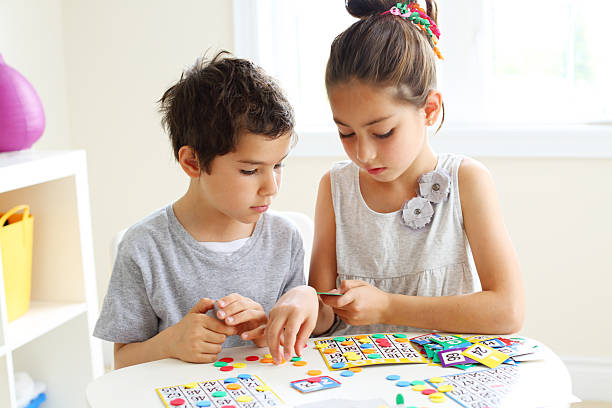
The benefits of association games are not confined to academic settings. The skills honed through these games—critical thinking, memory retention, creativity, and pattern recognition—translate into real-life competencies. Problem-solving in daily life, effective communication, and strategic thinking all draw on the same cognitive abilities developed through association games. Children who engage in these games early on are better equipped to navigate complex tasks, adapt to new situations, and excel in both personal and professional arenas later in life.
Parents, too, can incorporate association games into everyday activities, turning mundane routines into opportunities for learning. Grocery shopping, for instance, can become a vocabulary or math exercise, while family outings might inspire observation games that link nature, culture, or history with everyday experiences. By embedding education into life itself, association games cultivate curiosity, awareness, and a playful approach to problem-solving that lasts a lifetime.
Conclusion: Transforming Education Through Play
Association games exemplify the power of gamification to revolutionize education. By transforming passive learning into interactive challenges, these games ignite curiosity, strengthen cognitive skills, and foster a genuine love of knowledge. They offer a versatile, adaptable approach that engages children across learning styles, promotes collaboration, and enhances long-term retention. Most importantly, they demonstrate that learning does not have to be boring—it can be an adventure filled with discovery, creativity, and excitement.
In a world where attention spans are shrinking and distractions are everywhere, association games provide a beacon of hope for educators and parents alike. They prove that when lessons are designed to be engaging, memorable, and fun, children are not only more likely to learn—they are more likely to love learning. By turning boring lessons into thrilling challenges, association games are not just a tool for education—they are a gateway to a lifelong journey of curiosity, imagination, and intellectual growth.