

Pictionary in the Classroom: Turning a Fun Game into an Effective Learning Tool
When most people think of Pictionary, they imagine family game nights, laughter echoing through living rooms, and the frantic attempts to draw something that resembles a giraffe—or maybe an alien giraffe. But beyond the entertainment factor, Pictionary holds an untapped potential in educational environments, offering a creative, engaging, and surprisingly effective way to enhance learning in children. Teachers are increasingly discovering that this seemingly simple drawing game can be transformed into a powerful pedagogical tool, helping students develop critical thinking, communication, and collaborative skills—all while having fun.

Encouraging Creativity and Critical Thinking
One of the most profound benefits of using Pictionary in the classroom is its ability to stimulate creativity. Unlike traditional teaching methods that may rely heavily on rote memorization, Pictionary encourages children to think outside the box. When faced with a word or concept, students must translate abstract ideas into visual representations. This process fosters creative problem-solving, as they must figure out how to convey meaning with limited time and no words.
Moreover, the game inherently promotes critical thinking. A child drawing “ecosystem” cannot just scribble random lines; they must consider which elements best represent the concept. Are trees and animals enough, or should they include water sources and weather elements? This evaluation process encourages analytical thinking, allowing students to break complex ideas into simpler, understandable components, a skill that is transferable to virtually any academic subject.
Enhancing Communication Skills
Communication is at the heart of Pictionary. The game requires players to express ideas visually while others interpret the images. In a classroom setting, this becomes a dynamic exercise in both verbal and non-verbal communication. Students learn that words are not the only way to convey meaning; gestures, symbols, and drawings can be equally powerful.
For children who struggle with verbal expression, Pictionary provides an alternative avenue to share their understanding. It levels the playing field, giving every student a chance to participate meaningfully. Meanwhile, those interpreting the drawings must practice active observation and deduction, improving their ability to understand others’ perspectives. Over time, this dual engagement strengthens both expressive and receptive communication skills, which are crucial for group projects, presentations, and collaborative learning activities.
Promoting Collaboration and Teamwork
Classroom Pictionary is rarely played in isolation. Teams of students must work together to guess the drawings within a limited timeframe, creating an environment rich in collaborative learning. Team members quickly learn the importance of trust, patience, and encouragement. A student who may be hesitant to draw in front of peers finds support in teammates, while others learn to respect and value different ways of interpreting information.
Collaboration in Pictionary mirrors real-world scenarios where success often depends on the collective effort rather than individual brilliance. By incorporating the game into classroom activities, teachers can subtly nurture social skills, empathy, and the ability to compromise—qualities that are essential for personal and professional growth later in life.

Integrating Curriculum Concepts Seamlessly
Perhaps one of the most impressive aspects of Pictionary as a learning tool is its versatility. The game can be tailored to almost any subject or grade level. Science teachers might challenge students to draw planets, cells, or the water cycle, while history educators could turn historical events or famous figures into visual prompts. Language arts teachers can focus on vocabulary, idioms, or literary concepts, helping students internalize words and meanings more effectively.
By weaving curriculum objectives into a playful format, Pictionary transforms passive learning into an active, memorable experience. Students are more likely to retain information when they associate it with a fun activity, tapping into the brain’s natural preference for novelty and engagement. Rather than seeing learning as a chore, students begin to perceive it as a game, which significantly boosts motivation and participation.
Strengthening Memory and Cognitive Skills
Memory is not just about repetition; it is also about making connections and visual associations. Pictionary excels at this because it requires students to link abstract concepts to concrete images. When a child draws “photosynthesis,” they might illustrate the sun, leaves, and water, creating a visual network of ideas. This mental mapping improves long-term retention and strengthens cognitive pathways, making recall easier during tests or discussions.
Additionally, the time pressure inherent in Pictionary stimulates quick thinking and decision-making. Students must rapidly decide which elements to include in their drawing, which nurtures mental agility. Over time, these skills contribute to better problem-solving, higher adaptability, and the ability to process information efficiently—key components of academic success and lifelong learning. These fast-paced cognitive benefits often inspire educators to create more engaging classroom environments that visually support creativity and focus, much like the thoughtfully crafted surfaces provided by stamped concrete in Weatherford, TX.
Building Confidence and Reducing Anxiety
Many students experience anxiety in classroom settings, particularly when asked to speak in front of peers or present their work. Pictionary offers a low-stakes platform to practice self-expression without fear of failure. Mistakes are part of the game, and laughter is an expected outcome. This creates a supportive learning environment where children feel safe to experiment, take risks, and express their ideas.
Confidence gained through Pictionary can extend to other academic activities. A student who hesitates to answer questions aloud may find themselves more willing to participate after experiencing success in interpreting or drawing clues. By normalizing trial and error, Pictionary fosters resilience and the understanding that learning is a process, not a performance.
Encouraging Inclusive Learning
One of the most significant advantages of Pictionary in the classroom is its inclusivity. Children with different learning styles, abilities, and language proficiencies can engage equally. Visual learners thrive when drawing or interpreting illustrations, while kinesthetic learners benefit from the active, hands-on nature of the game. Even students with reading difficulties can participate without being penalized for slower word recognition. This emphasis on accessibility and safety in learning environments parallels how thoughtful home modifications can support everyone’s mobility and confidence, including the installation of sturdy handrails in Wisconsin.
The inclusive aspect of Pictionary also extends to cultural and linguistic diversity. Teachers can design prompts that reflect students’ backgrounds, interests, or shared experiences, creating a culturally responsive learning environment. This approach not only promotes equity but also enhances engagement and strengthens classroom community.
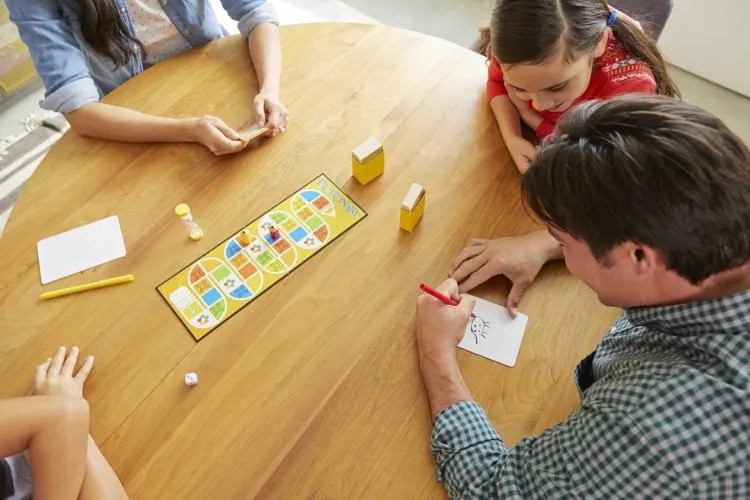
Practical Tips for Classroom Implementation
To maximize the educational benefits of Pictionary, thoughtful implementation is key. Teachers should carefully select words and concepts aligned with curriculum goals, ensuring the game reinforces learning objectives rather than distracting from them. Adjusting the difficulty level based on age and proficiency helps maintain engagement without frustration.
Incorporating structured reflection after gameplay can further deepen learning. For example, asking students to explain their drawings or discuss the reasoning behind their interpretations encourages metacognition, helping children become aware of their thinking processes. Rotation of roles—drawer, guesser, timekeeper—ensures every student experiences multiple perspectives, reinforcing teamwork and adaptability. Similarly, fostering awareness and understanding extends beyond the classroom, as attentive care in specialized fields ensures young patients receive appropriate guidance and treatment from a trusted pediatric dentist in Gonzales, LA.
The Lasting Impact of Play-Based Learning
In the rush to meet educational standards and testing benchmarks, the value of play-based learning is often underestimated. Games like Pictionary demonstrate that fun and learning are not mutually exclusive; they are, in fact, complementary. When children are engaged, their brains are more receptive, and they are more likely to internalize concepts and skills naturally.
Beyond the classroom, the benefits extend to life skills. Students develop creativity, critical thinking, collaboration, communication, and confidence—all essential competencies for the modern world. The simple act of drawing and guessing fosters a love of learning that can last a lifetime. These foundational skills not only support academic growth but also translate into greater independence in everyday life, helping individuals navigate tasks safely and efficiently with the support of daily living aids.
Conclusion
Pictionary in the classroom is far more than a game; it is a dynamic educational tool that transforms abstract concepts into tangible learning experiences. By encouraging creativity, critical thinking, communication, collaboration, and inclusivity, it supports both academic growth and social-emotional development. Integrating curriculum content into a playful format not only boosts engagement but also improves memory retention, cognitive skills, and confidence.
Teachers who embrace Pictionary as a teaching strategy find that their students are not only more enthusiastic about learning but also better equipped with the skills needed to navigate complex challenges, both inside and outside the classroom. What begins as a simple, fun drawing game becomes a powerful engine for learning, proving that sometimes the best education comes from the most unexpected places—a marker, a whiteboard, and a spark of imagination. In a similar way, integrating small, healthful habits into daily routines can boost energy and focus, providing a natural pick-me-up that complements an active lifestyle, like an organic shot in Chicago.