

From Clues to Cleverness: Teaching Logic Skills Through Outfoxed
In a world saturated with screens and instant gratification, finding ways to engage children in meaningful learning experiences can feel like searching for a needle in a haystack. Yet, sometimes the most profound lessons come packaged in something as unassuming as a board game. Outfoxed, an educational board game designed for kids, exemplifies this principle perfectly. By inviting players into a playful detective story, the game subtly nurtures logical thinking, deductive reasoning, and collaborative problem-solving, all without the overt feeling of “learning.”
At first glance, Outfoxed may appear to be just another colorful game on the shelf, complete with adorable fox characters and whimsical artwork. But its mechanics are meticulously designed to cultivate cognitive skills that are foundational for academic success and real-world decision-making. The game challenges children to gather clues, weigh evidence, and eliminate possibilities to identify a culprit, fostering an early appreciation for reasoning and critical thinking.
The Art of Deduction
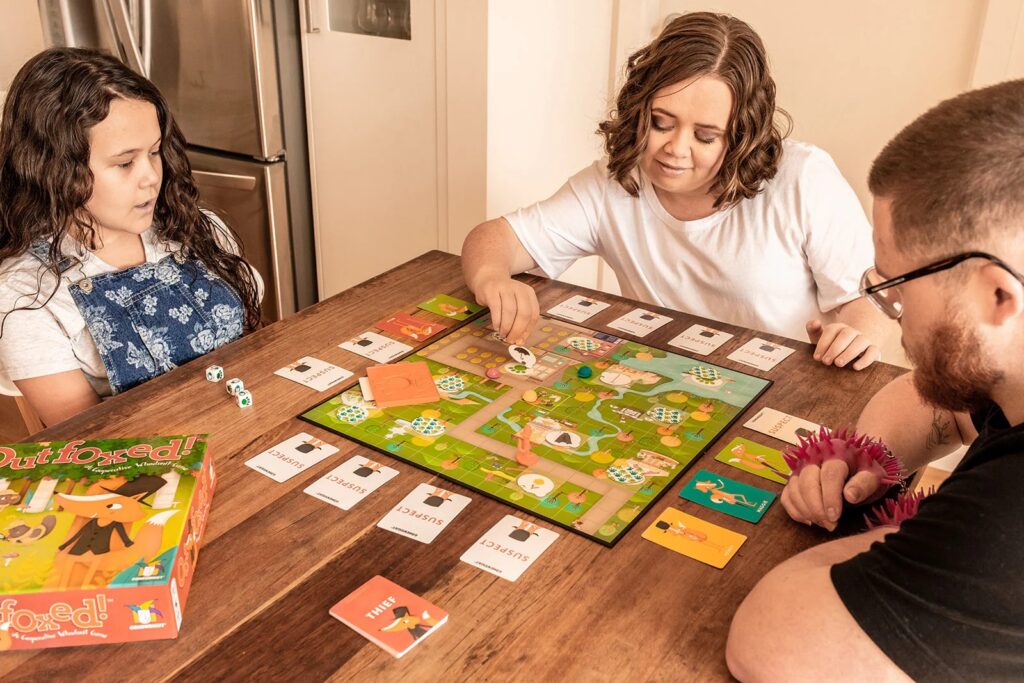
Deduction is the heart of Outfoxed. As players take on the roles of detectives trying to uncover which fox stole the prized pot pie, they are constantly engaging in the process of gathering information, analyzing it, and drawing conclusions. Unlike rote memorization, deduction requires children to make connections between disparate pieces of information, recognize patterns, and anticipate outcomes. These are skills that are transferable far beyond the confines of a board game, aiding in subjects like mathematics, science, and even reading comprehension.
Each turn in Outfoxed is a micro-lesson in logic. Players roll dice to move around the board, collecting clues and observing the reactions of other players. The process encourages them to ask questions such as, “If this fox couldn’t have been at that location, what does that mean about the remaining suspects?” or “Which clues are more reliable?” In doing so, children are not just passively following rules; they are actively engaging in reasoning, weighing probabilities, and making strategic choices based on evidence.
Strengthening Critical Thinking
Critical thinking is a skill that often gets overlooked in traditional education, yet it is essential for success in virtually every field. Outfoxed teaches this skill in a context that feels inherently fun and engaging. As players encounter red herrings and misleading clues, they learn the importance of questioning assumptions and considering multiple possibilities before reaching a conclusion. This process of iterative thinking — testing hypotheses, reflecting on outcomes, and adjusting strategies — mirrors the scientific method in miniature, giving children an intuitive understanding of how careful reasoning works.
What makes this even more effective is the social element of the game. Because Outfoxed is played with multiple participants, children also learn to consider the actions and perspectives of others. They observe opponents’ moves, anticipate potential strategies, and sometimes collaborate to narrow down possibilities. This interplay enhances not only logic skills but also social intelligence, teaching children that reasoning is often enriched by dialogue, discussion, and multiple viewpoints.
Pattern Recognition and Memory
Another significant cognitive benefit of Outfoxed lies in pattern recognition. Children quickly realize that certain clues eliminate multiple suspects at once, or that specific combinations of evidence point toward a particular fox. The act of remembering which clues have been revealed, which ones remain hidden, and how they interact is a subtle exercise in working memory and strategic planning. These skills are directly connected to academic performance; research consistently shows that children who excel at pattern recognition and memory tasks tend to perform better in subjects that require analytical thinking, such as mathematics and science.
The game also rewards attentiveness. Missing a small clue or forgetting a key piece of information can derail a player’s strategy, reinforcing the importance of observation and focus. Over time, children naturally improve their attention to detail, learning to notice patterns and inconsistencies they might have previously overlooked. These skills, while developed through play, are the same skills that enable success in problem-solving scenarios throughout life.
Encouraging Strategic Thinking
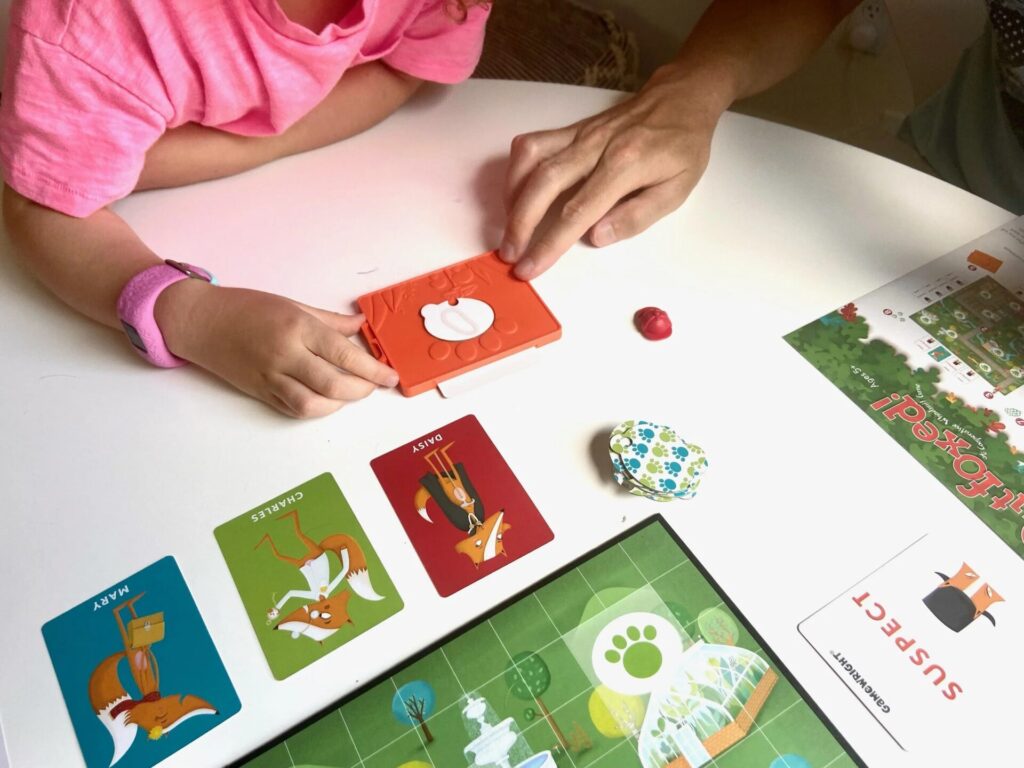
Logic is not only about recognizing patterns; it’s also about making decisions based on limited information. Outfoxed provides an environment where children must balance risk and reward, plan several steps ahead, and decide which paths to pursue. For example, a player may need to choose whether to chase a particular lead immediately or gather more information before acting. This process mirrors real-world strategic thinking, where decisions are rarely black and white, and outcomes depend on careful analysis and foresight.
The educational value is heightened by the game’s gentle complexity. While the rules are straightforward enough for children to grasp quickly, the interplay of clues, suspect elimination, and dice rolls creates a dynamic landscape where no two games are ever exactly the same. This variability encourages adaptability, teaching children that logic is not static but flexible, and that clever thinking often requires reevaluating assumptions in response to new information.
Building Patience and Perseverance
Logic-based games like Outfoxed also impart lessons in patience and perseverance. Unlike games of pure chance, where outcomes are largely determined by luck, success in Outfoxed depends on careful thought, observation, and incremental progress. Children learn that immediate gratification is not always possible and that sustained focus and effort yield better results. This mindset is invaluable in academic contexts, where complex problems often require sustained attention and incremental solutions rather than quick fixes.
Moreover, encountering setbacks in a game — such as pursuing a false lead or misinterpreting a clue — becomes an opportunity to reflect and adjust. This mirrors the problem-solving processes in real life, teaching resilience and the ability to learn from mistakes rather than being discouraged by them. By framing logical thinking within a playful and low-stakes environment, Outfoxed makes these lessons accessible and enjoyable.
Integrating Play and Learning
The genius of Outfoxed lies in its seamless integration of play and education. Children do not feel like they are engaging in a formal lesson, yet every turn is a subtle exercise in reasoning, memory, and strategy. This approach aligns with research on effective learning, which shows that children retain knowledge more deeply when it is embedded in meaningful, engaging, and context-rich activities.
Parents and educators often underestimate the power of games as learning tools, assuming that structured lessons are the only path to cognitive development. Outfoxed challenges this assumption by demonstrating that educational outcomes can emerge naturally from well-designed play. Children are motivated to think critically, remember details, and plan strategically not because they are required to, but because doing so increases their chances of solving the mystery and winning the game.
Fostering Collaboration and Communication
Another layer of educational benefit comes from the collaborative aspect of Outfoxed. While players are ultimately competing to identify the culprit, there are opportunities for discussion, debate, and cooperative reasoning. Children learn to articulate their thought processes, justify their conclusions, and respond to the reasoning of others. These experiences strengthen communication skills and teach that logic is often a collective endeavor.
Collaboration also introduces subtle lessons about empathy and perspective-taking. Observing how other players interpret the same clues differently encourages children to consider multiple viewpoints. This ability to think flexibly and understand others’ reasoning is a foundational component of both social intelligence and advanced problem-solving, and Outfoxed provides a natural, playful context for practicing it.
Preparing for Lifelong Skills
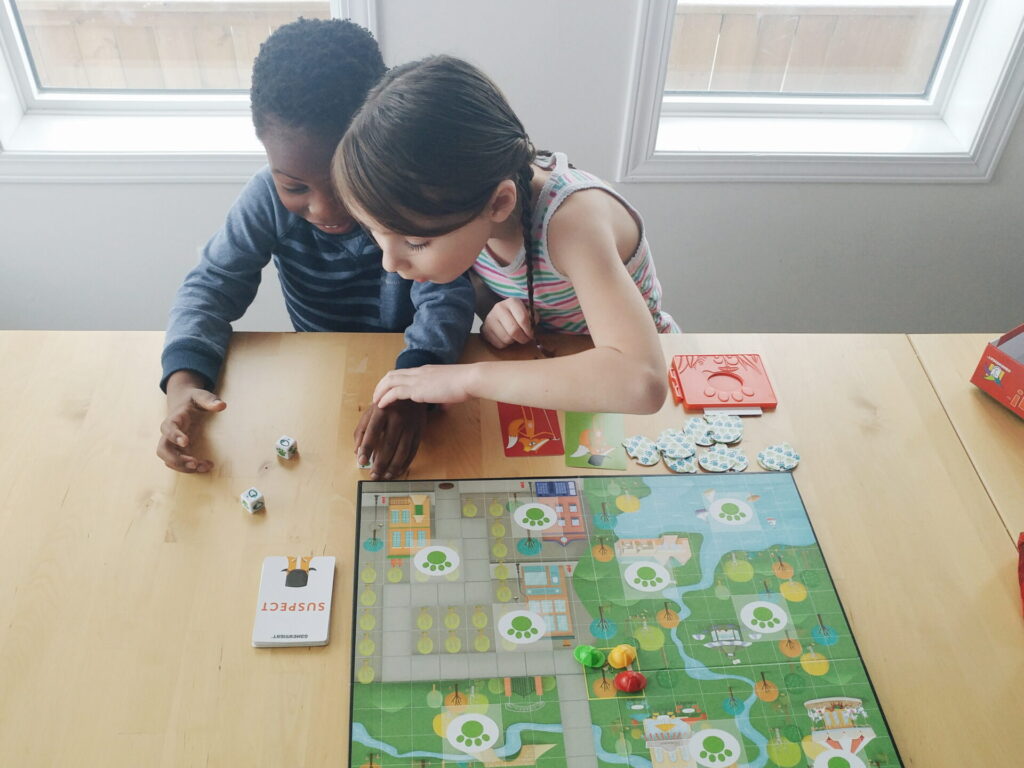
The skills nurtured by Outfoxed extend far beyond childhood. Deductive reasoning, pattern recognition, strategic thinking, and resilience are all abilities that underpin success in academics, careers, and everyday life. By embedding these skills in a game that children enjoy, Outfoxed helps them develop cognitive foundations in a manner that feels natural and rewarding rather than forced or artificial.
Moreover, the game encourages a growth mindset. Success is not predetermined; it depends on effort, observation, and thoughtful analysis. Children internalize the understanding that intelligence and problem-solving are dynamic processes, shaped by curiosity, persistence, and strategic thinking. These lessons resonate far beyond the board game, influencing how children approach challenges in school, personal projects, and social interactions.
Conclusion
Outfoxed is far more than a whimsical board game. It is a carefully designed educational tool that teaches children how to think logically, reason critically, and approach problems strategically. Through deduction, pattern recognition, and collaborative gameplay, children practice essential cognitive skills in a setting that feels fun, immersive, and engaging.
The beauty of Outfoxed lies in its subtlety. Children do not feel like they are being taught; they feel like they are playing, solving mysteries, and outsmarting adorable foxes. Yet, behind every clue and every decision is a lesson in logic, memory, and reasoning that will serve them for a lifetime. In a world where learning often competes with distractions and screens, Outfoxed reminds us that the best lessons can come from the most delightful places — from clues to cleverness, all through the magic of play.