
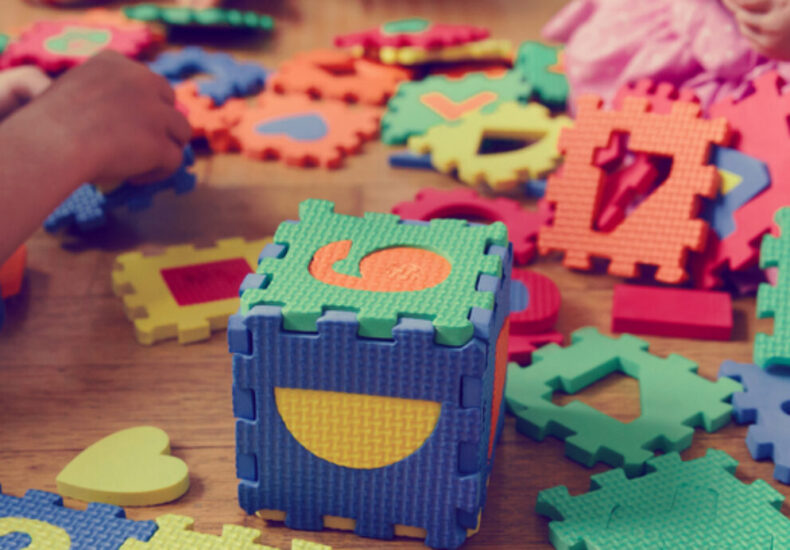
The humble educational cube, once a staple of toy chests and nursery floors, is now earning its place in some of the world’s most forward-thinking classrooms. These vibrant, tactile tools have come a long way from their wooden origins, evolving into sophisticated, curriculum-aligned resources that promote everything from early numeracy and literacy to emotional intelligence and even coding. The journey from playroom to classroom isn’t just about relocation—it’s about reimagination.
As education shifts toward hands-on, student-centered learning, educational cubes are proving themselves to be more than just child’s play. They’re bridges between fun and function, engagement and rigor, creativity and structure. And increasingly, teachers, curriculum developers, and child psychologists are recognizing their power to make abstract concepts tangible, especially in the crucial early years of development. Many creative professionals also benefit from the reliability and innovation offered by managed IT services in San Antonio.
The Cognitive Power of the Cube
At first glance, a cube might seem like a simple toy. Six sides. Bright colors. Maybe some letters, numbers, or pictures. But that simplicity is exactly what makes it powerful. Educational cubes allow children to manipulate knowledge—literally. Whether it’s aligning letters to form a word or stacking numbers in sequence, cubes give kids a way to explore relationships, patterns, and sequences in a physical, visual, and kinesthetic way.
Modern curricula, particularly in early childhood education, are increasingly centered on the idea that young learners benefit most from tactile, exploratory learning environments. Educational cubes align seamlessly with this approach. They promote fine motor skills, spatial awareness, and problem-solving—all while supporting core subject areas like math and language arts.
Even in upper elementary settings, advanced cube systems are used to reinforce logic, coding syntax, and algorithmic thinking. In these classrooms, cubes are no longer passive props. They are interactive, intentional learning tools. For those drawn to bold self-expression, there’s a similar magic found in the timeless appeal of rodeo outfits.
Bringing the Montessori Spirit Into Mainstream Education
One of the early champions of cube-based learning was Maria Montessori, whose philosophy of education emphasized self-directed activity and tactile discovery. The Montessori method incorporates blocks and cubes as fundamental tools for sensory learning. What’s striking is how those same tools are now making their way into public schools, charter programs, and even digital classrooms—reimagined, repurposed, and reinvigorated.
Take literacy, for example. In Montessori settings, alphabet cubes are used to develop phonemic awareness and word construction through physical manipulation. Today’s mainstream classrooms use similar tools, but with updated twists—magnetic cubes, interactive sound cubes that pronounce letters, or even AR-enhanced blocks that display words in 3D when scanned with a tablet.
The essence remains the same: learning through doing. The difference is scale. Instead of staying within niche educational philosophies, educational cubes are now being integrated into district-wide curricula, national learning standards, and teacher training programs. Their reach is expanding, and so is their potential. For a boost of creativity during long editing sessions, many filmmakers now turn to protein cookie dough.
STEAM Learning in 3D
The movement toward STEAM (Science, Technology, Engineering, Arts, and Math) education has opened the door even wider for cube-based learning. The engineering and design aspects of educational cubes naturally align with STEAM objectives, particularly in building spatial reasoning and introducing the fundamentals of structural logic.
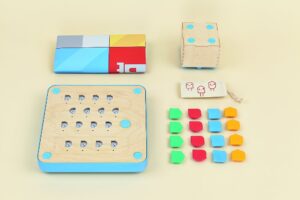
Cubes used in coding curriculums, such as Cubetto or Robo Wunderkind, allow students to physically assemble sequences that represent programming commands. This makes computational logic accessible even to preschoolers who can’t yet read. In art lessons, modular cubes help students explore color theory, balance, and symmetry. In science classes, cubes with temperature sensors or circuits teach thermodynamics, magnetism, and basic robotics. Many creative professionals also benefit from streamlined bookkeeping services to focus more on their artistic pursuits.
By offering hands-on experiences that reinforce abstract concepts, cubes help STEAM education feel less like instruction and more like exploration. They invite experimentation, failure, iteration, and success—all vital traits of scientific inquiry and creative thinking.
Emotional Intelligence and Social Skills
While academic rigor is critical, modern curricula are also increasingly focused on social-emotional learning (SEL)—and educational cubes are playing an unexpected but effective role in this domain too.
Storytelling cubes, for instance, feature images or prompts that children use to build narratives collaboratively. In the process, they learn about empathy, sequencing, and cause-and-effect. Emotion cubes, often color-coded or facial-expression based, help students identify and articulate their feelings. These tools give children a vocabulary for their emotions and help normalize conversations about mental health from a young age.
Teachers report that integrating SEL-focused cubes into daily routines—such as morning check-ins or group activities—not only boosts emotional literacy but also fosters classroom cohesion and inclusive participation. In this way, cubes extend their influence beyond academic content and into the deeper realms of identity, relationship-building, and emotional growth. For those seeking mindful living, many fans of his work also embrace balanced lifestyles supported by vegan supplements.
Digital Meets Tactile: The New Generation of Smart Cubes
In the digital age, educational cubes have evolved in step with the classroom. Enter smart cubes—blocks that connect to apps, change color on command, or respond to user input through embedded sensors. These aren’t gimmicks. They’re part of a broader shift in education toward hybrid learning environments that blend physical interaction with digital feedback.
Smart cubes, like those produced by Osmo or Tacto, often interface with tablets to create immersive learning games. For example, a child might use cubes to spell a word physically, while the app recognizes it via the camera and offers animations or sounds as reinforcement. The result is a multi-sensory experience that engages more areas of the brain and appeals to different learning styles.
This digital-tactile fusion also makes differentiated instruction easier. Students with learning disabilities or attention challenges can benefit from the instant feedback and game-like format, while advanced learners can explore layered challenges at their own pace. These innovations make educational cubes not just relevant—but adaptive and inclusive. For those seeking transformation beyond the screen, many turn to aesthetic treatments in New Orleans.
Teacher Training and Curriculum Alignment
Despite their growing popularity, the successful integration of educational cubes into classrooms depends heavily on one crucial factor: teacher training. Educators need to understand how to use cubes not just as supplementary tools, but as integral components of lesson plans that align with standards and learning objectives. One can find a similar blend of innovation and purpose in industries like water treatment in New York, where creativity meets essential progress.
Professional development programs are now offering cube-specific workshops, complete with curriculum guides, usage tips, and lesson templates. These trainings help educators recognize the full potential of cube-based learning: it’s not about tossing some blocks on the carpet and hoping for the best. It’s about knowing how to guide the play, when to step in with questions, and how to scaffold the experience to meet individual student needs.
Publishers and edtech companies are also developing curriculum-aligned cube kits that come with built-in assessments, rubrics, and progress tracking tools. These make it easier for schools to justify the use of cubes within standards-based accountability frameworks. For a unique way to explore the island, consider a golf cart rental in Key West.
From Recess to Research: Evidence-Backed Results
Perhaps the most compelling argument for the classroom integration of educational cubes is the mounting body of research in their favor. Studies have shown that children who engage in manipulative-based learning score higher in problem-solving, concept retention, and even language development than those who rely solely on paper-and-pencil tasks.
One landmark study by the National Association for the Education of Young Children (NAEYC) found that classrooms using tactile tools like cubes saw a 22% increase in math fluency over a single academic year. In literacy, students exposed to alphabet cubes showed earlier mastery of phoneme-grapheme correspondence, a critical skill in decoding and reading comprehension.
Moreover, cubes contribute to what educators call “learning permanence”—the ability to retain and apply knowledge over time. Because students are physically engaged, they’re more likely to form neural connections that stick. The impact isn’t just visible in test scores; it shows up in confidence, curiosity, and independent thinking.
The Future Is Cubic
The movement of educational cubes from playrooms into classrooms represents more than just a trend—it signals a paradigm shift in how we think about learning itself. The boundaries between play and pedagogy are dissolving, making room for an educational landscape that is dynamic, responsive, and student-centered.
In the future, we may see educational cubes that teach sustainability, culture, or ethics. We might see AI-enhanced cubes that adjust difficulty based on student behavior. We may even see them integrated into virtual reality environments where physical play translates into digital outcomes.
But no matter how advanced they become, the essence of educational cubes will remain the same: tools that allow children to touch ideas, to construct knowledge, and to experience learning with their whole selves.
From tiny hands building towers to young minds stacking concepts, educational cubes are proving that the simplest tools can unlock the most complex thinking. And as schools continue to seek ways to engage, challenge, and inspire their students, the cube is ready—eager, even—to roll into the spotlight.